

A registered Turkish trademark, patent, or design generates revenue in three ways: you use it, you sell it, or you license it. For most rights holders, licensing is the only one that lets you commercialize the IP without giving it up. A well-drafted Turkish license agreement turns a registration certificate into a recurring royalty stream, an enforceable channel relationship, or the legal backbone of a franchise system. A poorly drafted one creates years of disputes about who owns the goodwill, who pays the renewal fees, and whether the licensee can sue infringers in its own name.
At Leo Patent, we draft, negotiate, and record licensing agreements for trademarks, patents, utility models, designs, geographical indications, and copyrights, on behalf of Turkish and foreign licensors and licensees. This guide explains how licensing works under Industrial Property Law No. 6769, what a Turkish license must contain to be enforceable, how recordal with the Turkish Patent and Trademark Office actually changes the legal effect, and what the most expensive mistakes look like.
Why IP Licensing in Turkey Matters
Turkey is a large consumer market, a major manufacturing hub, and a gateway for distribution into the EU, the Middle East, North Africa, and Central Asia. Most international brands enter Turkey through some form of license: trademark licenses to local manufacturers, technology licenses to industrial partners, franchise agreements with regional operators, software licenses, or design licenses for local production.
The practical consequences of getting the licensing right are significant:
- Recordal with TÜRKPATENT is required for the license to be enforceable against third parties. An unrecorded license binds only the parties to the contract.
- Goodwill ownership must be clearly allocated. Under Turkish law, use by a licensee with the licensor’s consent is treated as use by the licensor for non-use cancellation purposes, but only if the license is structured properly.
- Quality control obligations are legally and commercially essential. Trademark licenses without quality control can expose the licensor to product-liability claims and dilute the brand’s distinctive character.
- Tax and transfer pricing. Royalty payments from Turkey to foreign licensors are subject to Turkish withholding tax (currently 20% on royalties from intangible IP, subject to applicable double tax treaty rates). Treaty positions and transfer pricing must be aligned with the license structure.
- Termination and survival. Turkish courts apply specific rules to early termination of long-term licenses. Drafting determines whether termination triggers a damages claim or a clean exit.
A Turkish license agreement is not a translation of a foreign template. It is a regulated commercial instrument under Turkish IP, contract, tax, and competition law.
Why Choose Leo Patent
Leo Patent is a Turkish intellectual property firm built around one principle: the trademark and patent attorney who advises you is the same person who answers your emails. No call centers. No outsourced contract review.
The firm is led by Burak Unal, a registered Turkish Patent Attorney (Registration No. 1677) and registered Turkish Trademark Attorney (Registration No. 2900), licensed to represent clients directly before the Turkish Patent and Trademark Office. Burak Unal handles license recordal with TÜRKPATENT, related IP prosecution work, and the IP-side review of licensing structures (scope of grant, recordal eligibility, alignment with the registered specification).
Burak Unal is authorized to act before TÜRKPATENT. For matters before other Turkish authorities (courts, Ministry of Culture and Tourism for copyrights, Turkish Competition Authority block exemption questions, Turkish Customs) and for any IP-related work in foreign jurisdictions, Leo Patent works with our co-owner Mr. Kaan Karanfiloglu (a senior Turkish lawyer) and a network of vetted authorized partner firms.
Leo Patent is co-owned by Mr. Kaan Karanfiloglu, a senior Turkish lawyer and registered trademark attorney. Kaan Karanfiloglu is admitted to the Istanbul Bar Association (Registration No. 58270) and the Union of Turkish Bar Associations (Registration No. 133074). License drafting that touches on Turkish contract law, competition law, tax, and court enforcement is handled by Mr. Kaan Karanfiloglu.
What foreign and Turkish clients consistently tell us they value:
- One firm for the whole license lifecycle. Drafting, negotiation, TÜRKPATENT recordal, post-signing monitoring, and dispute support, all coordinated under a single engagement.
- Fluent English correspondence. Drafts, term sheets, and negotiation correspondence in clear English, with full Turkish-language version handled internally.
- Transparent flat fees for standard license types. Custom and multi-jurisdictional engagements quoted with a written scope.
- Commercially literate drafting. Burak Unal’s combined background in Business Management (Boğaziçi University) and Finance (MSc, London School of Economics) means license drafts that read like commercial documents, not legal essays.
- Same-day response on working days across EU, UK, US, and Gulf time zones.
About Burak Unal, Turkish Patent and Trademark Attorney
Burak Unal is a trademark attorney and patent attorney at Leo Patent. He graduated from Boğaziçi University in 2016 with a degree in Business Management, and went on to complete an MSc in Finance at the London School of Economics.

- Patent Attorney Registration No.: 1677
- Trademark Attorney Registration No.: 2900
- Trademark and Patent Attorney Practice: Registered before the Turkish Patent and Trademark Office (TÜRKPATENT)
- Languages: Turkish (native), English (professional), French (professional), Chinese (professional)
Burak Unal’s licensing practice focuses on the TÜRKPATENT-side of license transactions: recordal of trademark, patent, utility model, and design licenses with TÜRKPATENT; recordal of assignments and security interests; alignment of license scope with the registered IP; coordination of corresponding international licensing where Turkey is part of a multi-country deal. He is authorized to act before TÜRKPATENT in Turkey. For other Turkish authorities and for foreign jurisdictions, work is coordinated with authorized partners and with our co-owner Mr. Kaan Karanfiloglu.
He serves Turkish licensors expanding abroad, foreign licensors entering Turkey, franchise systems, technology transfer transactions, and acquirers post-deal who need to clean up an inherited license portfolio.
What a Licensing Agreement Actually Is in Turkey
Under Article 24 (trademarks), Article 148 (patents), and the parallel provisions for designs, IP Law No. 6769 recognizes the license as a binding agreement under which the rights holder (licensor) authorizes another party (licensee) to use the IP within agreed terms, for an agreed consideration, in an agreed territory. Turkish licenses can be:
- Exclusive, where the licensor cannot grant further licenses and cannot itself use the IP in the licensed territory and scope.
- Sole, where the licensor cannot grant further licenses but retains the right to use the IP itself.
- Non-exclusive, where the licensor can grant further licenses freely.
Licensors and licensees can also enter:
- Sub-licensing rights (which must be expressly granted to be effective).
- Licensing by territory, by class of goods, by field of use, by channel, or by duration.
- Cross-licenses between two rights holders.
- Compulsory licenses under Articles 129 to 137 for patents in specific circumstances.
The license takes effect between the parties on signature. To be enforceable against third parties, it must be recorded with TÜRKPATENT.
Types of Licensing Agreements Leo Patent Drafts and Records
1. Trademark Licensing Agreements
Used for brand licensing into Turkey, franchise systems, distribution arrangements where the distributor uses the brand, and merchandising. Key clauses:
- Scope of the grant: trademark, classes, goods or services, territory, exclusivity, duration.
- Quality control: standards, inspection rights, approval of advertising and packaging.
- Royalty: rate, base, payment schedule, audit rights.
- Goodwill allocation: clear statement that goodwill from licensee’s use inures to the licensor.
- Permitted use: how the trademark must be displayed, with what notices.
- Enforcement: who has the right to sue infringers, joinder, notification obligations.
- Termination: events, notice periods, post-termination obligations, run-off rights.
2. Patent and Utility Model Licensing Agreements
Used for technology transfer, manufacturing licenses, and patent pools. Key clauses:
- Scope of the grant: patents covered, claims, fields of use, territory, exclusivity, duration.
- Royalty: per-unit, percentage of net sales, lump-sum, or hybrid.
- Improvements: ownership of licensee improvements, grant-back obligations.
- Know-how transfer: scope, format, training, support obligations.
- Warranties and indemnities: validity, non-infringement, freedom-to-operate.
- Enforcement: who controls infringement actions, cost sharing, settlement authority.
- Termination: events including invalidity findings, change of control.
3. Design Licensing Agreements
Used for industrial design rights, particularly in furniture, fashion, consumer goods, and homeware. Key clauses follow the trademark and patent templates, adapted to the term and scope rules of registered designs.
4. Franchise Agreements
Franchise agreements in Turkey are a complex hybrid: trademark license, know-how license, distribution agreement, and often real-estate license, all in one document. They must also align with Turkish Competition Authority block exemption rules and consumer protection rules. We work with our co-owner Mr. Kaan Karanfiloglu on the non-TÜRKPATENT components.
5. Copyright Licensing Agreements
Copyright licensing in Turkey is governed by Law No. 5846 (Law on Intellectual and Artistic Works) rather than IP Law No. 6769. Copyright licenses are not recorded with TÜRKPATENT. Leo Patent advises on the IP and commercial structure; specific Turkish copyright-law-side work is coordinated with authorized partners and our co-owner Mr. Kaan Karanfiloglu.
6. Technology Transfer Agreements
Combine patent, know-how, software, and trademark elements. Frequently subject to:
- Turkish Competition Authority block exemption analysis (Communiqué No. 2008/2 on Technology Transfer Agreements).
- Foreign exchange and Central Bank notifications for cross-border royalty flows.
- Withholding tax and double-tax-treaty positions.
7. Coexistence and Settlement Agreements
Used between holders of conflicting trademarks or designs to resolve disputes without litigation. We draft these and, where relevant, record them at TÜRKPATENT.
8. Assignment Agreements
Not licenses, but closely related. We draft and record assignments of trademarks, patents, utility models, designs, and geographical indications with TÜRKPATENT. Unrecorded assignments are not enforceable against third parties under Turkish IP law.
License Recordal with TÜRKPATENT
Recordal is the legal step that turns a private contract into a registered fact on the public register. It is what makes the license effective against third parties.
What Recordal Requires
| Item | Notes |
|---|---|
| Application form to TÜRKPATENT | Filed electronically by the registered trademark and patent attorney |
| Signed license agreement | Original or notarized copy; full text or summary depending on confidentiality |
| Turkish translation | Required if the agreement is in another language; we handle this in-house |
| Power of Attorney | Signed scan acceptable; no notarization required |
| Official fee | Per registered right; published TÜRKPATENT schedule |
Recordal Timeline
Recordal typically takes 1 to 3 months from filing. The license is effective between the parties from the date of signature, but only enforceable against third parties from the date of TÜRKPATENT recordal.
What Can and Cannot Be Recorded
- Exclusive, sole, and non-exclusive licenses can all be recorded.
- Sub-licenses can be recorded with the consent of the head licensor.
- Confidential commercial terms (royalty rates, financial terms) do not need to be on the public register. A summary or notarized short-form license can be recorded instead.
- Trade-secret-only agreements (no registered IP) cannot be recorded because there is no register to record them on.
Required Documents for a Licensing Engagement
| Document | Required For | Notes |
|---|---|---|
| Licensor and licensee details | All licenses | Legal entity name must match the commercial register |
| Registered IP details | All licenses | Registration numbers, classes, territory |
| Scope parameters | All licenses | Territory, exclusivity, duration, sublicense rights, field of use |
| Royalty terms | Most licenses | Rate, base, audit rights |
| Quality control standards | Trademark licenses | Inspection rights, approval rights |
| Existing license inventory | Where multiple licenses exist | To prevent conflict |
| Power of Attorney | For TÜRKPATENT recordal | No notarization required |
Common Mistakes in Turkish Licensing Agreements
After many years of license drafting, negotiation, and recordal, the most expensive mistakes we see are predictable:
- Using a foreign template without Turkish-law review. US, UK, or EU licensing templates often contain provisions that are unenforceable in Turkey, ambiguous under Turkish contract law, or out of alignment with the Turkish IP statute. A Turkish-law-side review is essential.
- Not recording the license with TÜRKPATENT. An unrecorded license is binding only between the parties. It cannot be used to stop third-party infringers and is not enforceable against subsequent purchasers of the IP.
- No quality control in trademark licenses. Trademark licenses without quality control risk dilution and can expose the licensor to product-liability claims and consumer-protection issues.
- Ambiguity on who pays renewals and annuities. Many trademark and patent licenses go silent on renewals. When the IP lapses for non-payment, both sides claim the other party was responsible. Draft this expressly.
- No clarity on infringement enforcement. Who has standing to sue infringers in the licensed territory? Can the licensee join? Who pays? Who collects damages? These are basic but frequently omitted.
- Ignoring withholding tax. Royalty payments from Turkey to foreign licensors are subject to Turkish withholding tax, typically 20% on intangible-IP royalties, often reduced by double-tax treaty. The license should be clear on whether the royalty is gross or net of tax, and which party bears the gross-up.
- No provision for invalidity of the IP. If the licensed trademark or patent is later invalidated, what happens to royalties already paid? What happens to ongoing obligations? Most poorly drafted licenses say nothing.
- Inadequate termination drafting. Turkish courts pay close attention to termination clauses in long-term commercial relationships. Improperly drafted termination triggers material damages claims.
- No alignment with Turkish Competition Authority block exemptions. Vertical agreements (including some licenses) must respect Turkish Competition Authority rules. Restrictions on territory, customer, price, or grant-back can be unenforceable or expose the parties to fines if drafted without competition-law awareness.
- Treating a Madrid-only mark as fully licensable in Turkey. A Madrid Protocol designation of Turkey is enforceable in Turkey, but recordal of a license against a Madrid designation has specific procedural requirements. Foreign licensors sometimes treat it as a straightforward national mark and skip steps.
Frequently Asked Questions (FAQ)
1. Are licensing agreements in Turkey enforceable without recordal at TÜRKPATENT?
Yes, between the parties. The contract is binding under Turkish contract law on signature. However, the license is not enforceable against third parties (including subsequent purchasers of the IP, infringers, and creditors) until it is recorded with TÜRKPATENT. Recordal is therefore essential for any license that the parties intend to rely on in commercial disputes or enforcement.
2. What types of IP can be licensed in Turkey?
All registered industrial property rights can be licensed: trademarks, patents, utility models, industrial designs, and geographical indications (with the important caveat that GIs are collective rights with restricted assignability). Copyrights are licensed under Law No. 5846 outside the TÜRKPATENT framework. Trade secrets and know-how are licensed by contract.
3. Can a foreign company license its trademark to a Turkish licensee?
Yes. Foreign licensors regularly license trademarks into Turkey. The trademark must be a Turkish registration (national or Madrid Protocol designation of Turkey). The license should be recorded with TÜRKPATENT to be effective against third parties.
4. Are exclusive licenses better than non-exclusive licenses?
It depends on the commercial deal. Exclusive licenses command higher royalties but bind the licensor to a single partner in the territory and scope. Non-exclusive licenses preserve flexibility but typically generate lower per-license royalties. Sole licenses are a middle ground. Choice depends on market strategy.
5. How long does TÜRKPATENT recordal take?
Typically 1 to 3 months from filing. Recordal does not affect the validity of the license between the parties (which is effective from signature), only its enforceability against third parties.
6. Can confidential royalty rates be kept off the public register?
Yes. TÜRKPATENT accepts recordal based on a short-form license or a summary document confirming the existence and key public terms of the license. Confidential commercial terms (royalties, audit mechanics, financial covenants) can be kept out of the recorded version.
7. What is the typical royalty rate in Turkey?
It depends on the IP, the industry, and the deal structure. Trademark royalties on consumer goods commonly fall in the 3% to 8% of net sales range, with luxury and franchise systems higher. Patent royalties on industrial technology often fall in the 2% to 6% range. These are commercial benchmarks, not legal limits.
8. Is Turkish withholding tax payable on royalties to foreign licensors?
Yes. The current statutory withholding rate on royalties from intangible IP paid to non-resident licensors is 20%, subject to reduction under applicable double tax treaties (often to 10%). The license should expressly allocate the tax burden (gross-up clauses or net-of-tax clauses).
9. Can a licensee sue infringers in Turkey?
It depends on the license. Exclusive licensees generally have standing to sue infringers in Turkey, subject to notice to the licensor. Non-exclusive licensees typically do not have independent standing. The license agreement should expressly address standing, joinder, control of litigation, and allocation of recoveries. Litigation work is handled by our co-owner Mr. Kaan Karanfiloglu.
10. Are there limits on what a Turkish trademark license can contain?
Yes. Restrictions on territory, pricing, customer base, or grant-backs can be subject to Turkish Competition Authority scrutiny under the Communiqués on Vertical Agreements and Technology Transfer Agreements. Improperly structured restrictions can be void or expose the parties to fines.
11. Can I license a Madrid Protocol designation of Turkey?
Yes. A Madrid designation of Turkey is a Turkish trademark right for licensing purposes. Recordal of the license against the Madrid designation can be done through TÜRKPATENT or, in some cases, recorded at WIPO with effect in Turkey. The procedure is slightly different from a fully national mark.
12. Does Leo Patent handle license drafting for foreign jurisdictions?
Leo Patent handles the Turkish-side of multi-jurisdictional licensing transactions: Turkish IP review, TÜRKPATENT recordal, alignment with Turkish IP law, and coordination of the broader transaction. For drafting and recordal in foreign jurisdictions, we coordinate with authorized partner firms in each destination country under a single coordinated engagement.
13. What happens to a recorded license if the licensor sells the IP?
Recorded licenses bind the purchaser of the IP. Unrecorded licenses generally do not bind a good-faith purchaser. This is the single most important practical consequence of recordal.
14. Can a licensor terminate a long-term Turkish license for breach?
Yes, but the drafting must be precise. Turkish courts review termination clauses in long-term commercial relationships carefully and can award damages where termination is unjustified. Notice periods, cure rights, and material breach definitions must all be clearly set out.
15. Does Leo Patent help with negotiation, or only drafting?
Both. We routinely sit on calls and in negotiation sessions with the other side and the client’s commercial team. Drafting, review, mark-up exchange, term-sheet preparation, and negotiation support are all part of a standard licensing engagement.
16. How much does a licensing agreement engagement cost?
It depends on the complexity. Standard trademark or patent licenses with TÜRKPATENT recordal typically fall in the range of EUR 1,500 to 5,000 including drafting and recordal. Complex multi-jurisdictional technology transfer deals, franchise agreements, and patent pool agreements are higher. Leo Patent provides a written flat-fee quote before any work begins.
17. Are letters of intent and term sheets binding in Turkey?
Some clauses are. Under Turkish law, certain provisions of a letter of intent (confidentiality, exclusivity, governing law) are typically binding while the commercial terms remain non-binding. Drafting must be explicit on which is which. We routinely prepare and review term sheets before full license drafting.
18. Can a license be assigned by the licensee to a third party?
Only if the license expressly permits it (typically with the licensor’s consent). Most Turkish licenses include change-of-control and assignment restrictions. Unauthorized assignment is a common ground for termination.
19. Can software licenses for Turkish use be recorded at TÜRKPATENT?
Only if there is a registered IP (such as a patent or trademark) underlying the software license. Pure copyright-only software licenses are not recorded at TÜRKPATENT. They are typically managed under contract and, where relevant, under Law No. 5846 procedures.
20. What is the difference between an assignment and a license?
An assignment transfers ownership of the IP to the assignee, who becomes the new registered owner. A license retains ownership with the licensor and grants the licensee a right to use the IP within agreed terms. Both must be recorded with TÜRKPATENT to be effective against third parties.
Draft, Negotiate, or Record Your Licensing Agreement: Talk to a Registered Turkish Trademark and Patent Attorney
If you are a licensor expanding into Turkey, a licensee taking a license from a foreign rights holder, or an acquirer post-deal cleaning up an inherited license portfolio, Leo Patent can help. We offer:
- A free initial assessment of your licensing question
- A written flat-fee quote covering drafting, negotiation support, and TÜRKPATENT recordal
- Direct, English-language correspondence with a registered Turkish patent and trademark attorney
- Coordinated handling of Turkish IP recordal, Turkish contract-law-side drafting (with our co-owner Mr. Kaan Karanfiloglu), and foreign-jurisdiction work through authorized partner firms
Contact Leo Patent today for licensing agreement work in Turkey.
Email: [email protected] Website: www.leopatent.com
License recordal handled directly before the Turkish Patent and Trademark Office (TÜRKPATENT).
Important Note: Leo Patent offers trademark and patent attorney services for intellectual roperty registration and consulting in Turkey. We don’t offer lawyer services.
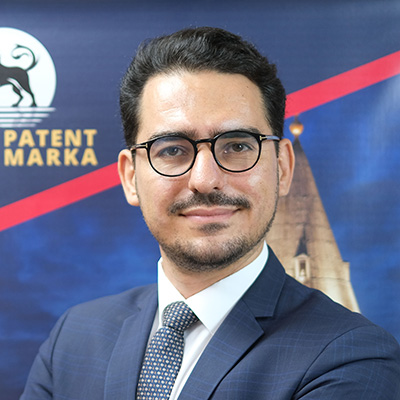
Burak Ünal
“With its innovative solutions and transparent service policy, Leo Patent is Turkey's leading intellectual and industrial property rights consultancy firm.”