

Registering a trademark in Turkey is one of the most important commercial steps a business takes before entering the Turkish market. Maybe you are a global brand opening up in Istanbul, a manufacturer sourcing from Bursa or Izmir, or an entrepreneur launching something new. In every case, your brand name and your logo stay legally exposed until the moment they are written into the official register of the Turkish Patent and Trademark Office (Türk Patent ve Marka Kurumu, or TÜRKPATENT).
At Leo Patent, we file, prosecute, and defend trademark applications in Turkey for Turkish and foreign clients every working day. This guide walks you through how the process actually works, what it costs in time and effort, and what every applicant, whether local or international, should know before filing. We offer trademark and patent attorney services in Turkey.
Why Trademark Registration in Turkey Matters?
Turkey runs a first-to-file trademark system under Industrial Property Law No. 6769, which has been in force since 10 January 2017. In practical terms this means that, apart from very narrow exceptions, the party who files the application first secures the exclusive right to the mark in Turkey. It does not matter who started using the brand somewhere else first.
The practical consequences for businesses are significant:
- Without a Turkish registration, you cannot reliably stop third parties from registering or using your brand in Turkey.
- Turkish Customs cannot detain counterfeit goods at the border unless you hold a registered trademark recorded in the customs IP enforcement system.
- Distribution agreements, franchise deals, and licensing contracts in Turkey only become legally effective and recordable once your trademark is registered.
- Bad-faith filings by former distributors, agents, or copycats are a recurring problem in Turkey, and they are far cheaper to prevent than to litigate.
A registered Turkish trademark is not a formality. It is the legal foundation of every commercial right you intend to exercise in the country.
Why Choose Leo Patent?
Leo Patent is a Turkish intellectual property firm built around one simple principle: the trademark attorney who signs your application is the same person who answers your emails. No call centers, no ticket queues, no junior staff handling sensitive prosecution decisions on the side.
The firm is led by Burak Unal, a registered Turkish Patent Attorney (Registration No. 1677) and registered Turkish Trademark Attorney (Registration No. 2900), licensed to represent clients directly before the Turkish Patent and Trademark Office. The firm is co-owned by a senior Turkish Lawyer, Mr. Kaan Karanfiloglu, who is also a trademark attorney. Kaan Karanfiloglu’s Istanbul Bar Association Registration number is 58270, and his Turkey Bar Association Union registration number is 133074.
What clients consistently tell us they value:
- Direct trademark and patent attorney access. Foreign clients work directly with a Turkish-qualified trademark and patent attorney from the first email all the way through to the registration certificate. There is no account manager forwarding messages to an unnamed back office.
- Fluent English correspondence. Filings, office actions, oppositions, and strategy memos are handled in clear English, and full Turkish-language compliance is taken care of internally. We also speak French, Spanish, Chinese and Russian for our foreign clients.
- Transparent flat fees. Government fees, trademark and patent attorney fees, and translation costs are all disclosed before you sign anything. We do not bill in opaque hourly increments for routine prosecution work.
- Same-day response to client emails on working days. We work comfortably across EU, UK, US East Coast, and Gulf time zones as a matter of course.
- Strategic filing advice, not order-taking. We will tell you when a class is poorly chosen, when a mark looks descriptive, when a likely conflict already exists, and when a different filing strategy (Madrid extension, a series of national filings, or defensive registrations) protects your commercial interests better.
- Direct representation before TÜRKPATENT and the Re-examination and Evaluation Board (YİDK). As registered trademark and patent attorneys, we file, argue, and appeal in our own name on our clients’ behalf.
When your trademark is contested, refused, or opposed, you want a Turkish attorney whose registration is actually on the file, not an intermediary in the middle.
About Burak Unal, Turkish Trademark and Patent Attorney
Burak Unal is a trademark attorney and patent attorney at Leo Patent. He graduated from Bogazici University in 2016 with a Business Management degree. He also holds an MSc in Finance from the London School of Economics.
- Patent Attorney Registration No.: 1677
- Trademark Attorney Registration No.: 2900
- Trademark and Patent Attorney Practice: Registered before the Turkish Patent and Trademark Office (TÜRKPATENT)
- Languages: Turkish (native), English (professional), French (professional), Chinese (professional)
Burak Unal’s practice focuses on the application of trademarks and patents on behalf of foreign rights holders in Turkey. His work covers national Turkish filings, Madrid Protocol designations of Turkey, oppositions and YİDK appeals, and trademark attorney services in Turkey.
He represents clients across pharmaceuticals, consumer electronics, fashion, food and beverage, industrial machinery, software, and professional services. The client base includes multinational corporations entering Turkey for the first time, as well as SMEs protecting a single core brand.
Burak Unal’s practice rests on a simple belief: effective IP protection in Turkey needs a Turkish trademark and patent attorney who knows not only the statute, but how examiners and opposition divisions actually apply it.
The Trademark Application Process in Turkey, Step by Step
Below is the full prosecution timeline from initial instruction to grant. The indicative timelines reflect typical TÜRKPATENT processing as of 2026. Statutory periods are fixed by law.
Step 1: Trademark Search and Clearance
Timeline: 2–5 working days
Before filing, we recommend a clearance search against the Turkish register, against prior pending applications, and against known well-known marks. A proper Turkish search covers:
- Identical and phonetically similar Turkish-language marks
- Latin-script and Turkish-script equivalents (including diacritics: ç, ğ, ı, ö, ş, ü)
- Marks registered in the same and similar Nice classes
- Marks transliterated into Turkish (a frequent source of conflict for Arabic, Cyrillic, and Chinese-language brands)
The search report shows blocking marks, weak elements, and whether the mark needs a redesign or a refile.
Step 2: Nice Classification and Goods/Services Strategy
Timeline: 1–2 working days after instruction
Turkey is a member of the Nice Agreement and applies the Nice Classification, currently the 12th edition. Choosing the right classes is the single most important strategic decision in a Turkish trademark file. TÜRKPATENT charges per class, and once filed, the specification cannot be broadened.
We advise on:
- Selecting only the classes you genuinely use or intend to use within five years (to avoid non-use cancellation under Article 9 of IP Law No. 6769)
- Using sub-class headings carefully, because TÜRKPATENT applies the sub-class similarity test when assessing conflicts
- Avoiding class headings alone, which can leave gaps in coverage
Step 3: Document Preparation
Timeline: 1–3 working days
We prepare and translate the application, the Power of Attorney, the priority documents (if applicable), and the goods/services list in Turkish.
Step 4: Filing the Application with TÜRKPATENT
Timeline: Same day
Applications are filed electronically through the TÜRKPATENT online system. The applicant receives an official application number and filing date on the same day.
Step 5: Formal Examination
Timeline: Approximately 1–3 months
TÜRKPATENT reviews the application for compliance with formal requirements and for absolute grounds for refusal under Article 5 of IP Law No. 6769. Typical issues here are descriptiveness, lack of distinctiveness, deceptiveness, or prior identical marks for identical goods.
Step 6: Publication in the Official Bulletin
Timeline: After formal acceptance
The mark is published in the Official Trademark Bulletin for a 2-month opposition period, during which any third party may oppose registration under Article 6 (relative grounds).
Step 7: Opposition Proceedings (If Any)
Timeline: 4–12 months if opposed
If a third party files an opposition, we prepare a substantive response with evidence and legal argument. Decisions are issued by TÜRKPATENT’s Trademarks Department and may be appealed to the Re-examination and Evaluation Board (YİDK) within two months.
Step 8: Registration and Issuance of the Certificate
Timeline: 1–2 months after the opposition period (if unopposed)
Once the registration fee is paid, TÜRKPATENT issues the Trademark Registration Certificate. The registration is valid for 10 years from the filing date and is renewable indefinitely in 10-year periods.
Total typical timeline for an unopposed application: 6–8 months. For an opposed application: 12–18 months.
Required Documents for a Trademark Application in Turkey
The documents required for a Turkish trademark application depend on whether the applicant is an individual, a company, or a foreign applicant. In most cases, the application can be filed with basic applicant details, a trademark sample, and a list of goods and services.
| Document | Required For | Notes |
|---|---|---|
| Applicant name and address | All applicants | Must match the official company or personal records. |
| Trademark sample | All applicants | Required for word, logo, device, color, sound, or other mark types. |
| List of goods and services | All applicants | Goods and services must be classified according to the Nice Classification. |
| Power of Attorney | Foreign applicants and represented applicants | No notarization or legalization is usually required for standard trademark filings in Turkey. |
| Company information | Corporate applicants | Company name, address, country of incorporation, and tax or registration details may be requested. |
| Priority document | Applicants claiming priority | Required only if priority is claimed under the Paris Convention. |
| Translation | Foreign-language documents | Turkish translation may be required depending on the document type. |
The simplicity of the Turkish POA requirement for trademark and patent services is one of the real practical advantages of filing in Turkey. There is no notarization, no apostille, and no consular legalization. A signed PDF emailed to us is enough to begin.
Types of Trademarks Registrable in Turkey
Turkish law recognizes a broad range of sign types under Article 4 of IP Law No. 6769:
- Word marks: names, slogans, and letter combinations in Latin or other scripts
- Logo marks: figurative or device marks, with or without text
- Combined marks: word and figurative elements together
- Slogans: protectable where distinctive (not merely promotional)
- 3D marks: product shapes and packaging, where non-functional and distinctive
- Color marks: single colors or color combinations, where acquired distinctiveness can be shown
- Sound marks: represented by sonogram or musical notation
- Motion marks: represented by sequential images or video
- Position marks: where the placement of the sign is the distinctive element
- Pattern marks: repeating visual patterns
- Hologram marks: represented by images showing the holographic effect
Turkey does not currently grant scent or taste marks, because the graphical representation requirements cannot reliably be met.
Who Can Apply for a Trademark in Turkey?
There is no nationality restriction. Any of the following can file a Turkish trademark application:
- Turkish individuals and companies: file directly or through a registered trademark and patent attorney
- Turkish individuals who live abroad: must appoint a registered Turkish trademark attorney
- Foreign individuals (natural persons) of any nationality: must appoint a registered Turkish trademark attorney
- Foreign companies and legal entities: must appoint a registered Turkish trademark attorney
- International applicants via the Madrid Protocol: designate Turkey through WIPO. Local representation is still needed if a refusal or opposition arises.
Turkey is a member of the Paris Convention, the Madrid Agreement and Protocol, the Nice Agreement, the Vienna Agreement, the TRIPS Agreement, and the Singapore Treaty. Foreign applicants enjoy full national treatment.
Important: Under Turkish law, foreign applicants without a Turkish residence or place of business cannot file directly. Representation by a registered Turkish trademark attorney is mandatory. Leo Patent acts as registered representative for clients in over 30 countries.
Benefits of Registering Your Trademark in Turkey
A registered Turkish trademark gives you:
- Exclusive nationwide rights to use the mark for the registered goods and services for 10 years, renewable indefinitely
- The right to prevent third parties from using identical or confusingly similar signs (Articles 7 and 29 of IP Law No. 6769)
- The right to file civil infringement actions for injunctions, damages, and destruction of infringing goods
- The right to file criminal complaints against counterfeiters under Article 30, which is punishable by imprisonment of 1 to 4 years and judicial fines
- Customs enforcement: record your mark with the Turkish Customs Authority to detain counterfeit imports and exports at the border
- Licensing and franchising rights: record license agreements with TÜRKPATENT for enforceability against third parties
- Asset value: trademarks are recognized intangible assets and are transferable, mortgageable, and capable of being valued on the balance sheet
- A basis for Madrid Protocol filings abroad using Turkey as the home country
- Defensive value: a registered mark blocks bad-faith registrations and copycat filings
Common Mistakes Foreign Applicants Make in Turkey
After working through thousands of files, the most expensive mistakes we see all follow a predictable pattern:
1. Choosing the wrong Nice classes. Filing in too few classes leaves gaps. Filing in too many wastes fees and exposes the registration to non-use cancellation after five years. We rebuild specifications case by case.
2. Filing weak or descriptive marks. Marks that describe the goods (for example, “Fresh Bread” for a bakery) or that are common in the trade are refused under Article 5. We flag this before filing, not after.
3. Skipping the clearance search. A €200 search saves a €5,000 opposition battle. Foreign applicants routinely file without checking the Turkish register, and only discover a senior identical mark after publication.
4. Filing late, after entering the market. Once you start importing, marketing, or distributing in Turkey, third parties (including former distributors) can race you to the register. File before the first commercial activity.
5. DIY filings without a Turkish trademark and patent attorney. Foreign applicants who try to file through general legal counsel or non-specialist agents routinely lose oppositions on procedural grounds, miss YİDK appeal deadlines, or end up accepting overly narrow specifications.
6. Forgetting renewals. The 10-year renewal must be filed within the 6 months before expiry, with a 6-month grace period at higher fees. Missing the deadline forfeits the registration.
7. Failing to record assignments and licenses. Unrecorded transfers and licenses are not enforceable against third parties in Turkey.
Frequently Asked Questions (FAQ)
1. How long does trademark registration take in Turkey?
An unopposed Turkish trademark application usually reaches registration in 6 to 8 months from the filing date. If an opposition is filed during the 2-month publication period, the process can stretch out to 12–18 months, depending on the complexity of the dispute and any YİDK appeals.
2. Can foreigners register a trademark in Turkey?
Yes. Any foreign individual or foreign company can register a trademark in Turkey under exactly the same conditions as Turkish citizens, with full national treatment under the Paris Convention. The only requirement is that foreign applicants without a residence or business in Turkey must appoint a registered Turkish trademark attorney to act on their behalf. We are a registered trademark attorney, and we provide services to foreigners.
3. How much does it cost to register a trademark in Turkey?
The total cost depends on the number of Nice classes and whether an opposition is filed. As of 2026, a single-class unopposed Turkish trademark application typically falls in the range of EUR 450–750, covering official TÜRKPATENT fees, attorney fees, and the registration fee. Each additional class adds a relatively small incremental cost. Leo Patent provides written flat-fee quotes before any work begins.
4. What happens if my trademark application is rejected?
If TÜRKPATENT refuses your application on absolute grounds (Article 5) or following a successful opposition (Article 6), you have two months to appeal to the Re-examination and Evaluation Board (YİDK). If YİDK upholds the refusal, you may file a cancellation action before the Ankara IP Courts within two months of notification. Leo Patent handles all three levels.
5. How long is trademark protection valid in Turkey?
A Turkish trademark registration is valid for 10 years from the filing date and can be renewed indefinitely in further 10-year periods. There is no limit on the number of renewals.
6. Can I file a trademark application online in Turkey?
Yes. All Turkish trademark applications are filed electronically through TÜRKPATENT’s online portal. That said, only registered Turkish trademark attorneys can use the e-filing system on behalf of foreign applicants, and only attorneys can receive electronic service of office actions.
7. Is a Turkish trademark attorney required for foreign applicants?
Yes. Under Article 160 of IP Law No. 6769, individuals and legal entities without a residence or place of business in Turkey must be represented by a Turkish trademark attorney registered with TÜRKPATENT. This is not optional and applies to all post-filing acts (oppositions, responses, appeals, renewals, recordals). If a foreigner has a residence permit in Turkey, the foreigner can apply directly without a trademark attorney.
8. Does Turkey use the Nice Classification?
Yes. Turkey is a party to the Nice Agreement and applies the Nice Classification (NCL), 12th edition. Government fees are charged on a per-class basis.
9. Is Turkey part of the Madrid Protocol?
Yes. Turkey has been a member of the Madrid Protocol since 1 January 1999. Foreign holders of an international registration can designate Turkey through WIPO. If TÜRKPATENT issues a provisional refusal or the mark is opposed, a registered Turkish attorney must be appointed to respond.
10. Can I claim priority from an earlier foreign trademark filing when I apply for trademark in Turkey?
Yes. Under the Paris Convention, Turkey recognizes priority claims filed within 6 months of the first foreign application. A certified copy of the priority document must be submitted with the Turkish filing or shortly after.
11. What is the opposition period in Turkey?
The opposition period is 2 months from the date of publication of the application in the Official Trademark Bulletin. This deadline is strict and cannot be extended.
12. What are the grounds for opposing a trademark in Turkey?
Under Article 6 of IP Law No. 6769, oppositions can be based on, among others:
- Earlier identical or confusingly similar registered or applied-for marks
- Well-known marks under Article 6bis of the Paris Convention
- Bad-faith filings
- Unauthorized filings by agents or representatives
- Earlier unregistered rights acquired through use
- Conflict with personal names, copyright, industrial designs, or geographical indications
13. Can I license or assign my Turkish trademark?
Yes. Turkish trademarks can be licensed (exclusively or non-exclusively), assigned, mortgaged, and inherited. To be enforceable against third parties, assignments and licenses must be recorded with TÜRKPATENT. Assignments must be in writing.
14. What is the “use requirement” for Turkish trademarks?
A Turkish trademark must be genuinely used in Turkey within 5 years from the registration date. Non-use during any continuous 5-year period can lead to cancellation for non-use under Article 9, either through TÜRKPATENT’s administrative cancellation procedure (in force since 10 January 2024) or through the IP Courts.
15. Can a former distributor or agent register my brand in Turkey?
Unfortunately yes, and it happens regularly. Under Article 6(2) of IP Law No. 6769, you can challenge such bad-faith filings, but the safer and far cheaper strategy is to register before appointing distributors or agents. We strongly advise filing Turkish trademark applications before entering any commercial relationship in Turkey.
16. Does a Turkish registration protect my mark in the EU?
No. A Turkish registration is territorial and protects the mark only in Turkey. For EU protection, you need an EU Trade Mark (EUTM) filed with EUIPO, or national filings in EU member states. We routinely coordinate parallel filings.
17. Can I register a trademark in my own name and then transfer it to my company?
Yes, but the assignment must be properly drafted and recorded with TÜRKPATENT to be enforceable. We recommend filing in the correct corporate name from the outset, which avoids extra fees and possible tax implications later.
File Your Trademark in Turkey: Talk to a Registered Turkish Attorney
If you are preparing to enter the Turkish market, expanding an existing brand, or responding to an opposition or refusal, Leo Patent can help. We offer:
- A free initial assessment of your mark and proposed classes
- A written flat-fee quote covering official fees, attorney fees, and translation
- Filing within 1–3 working days of instruction
- Direct, English-language correspondence with a registered Turkish trademark attorney throughout the process
Contact Leo Patent today to file your trademark application in Turkey with confidence.
Email: [email protected] Website: www.leopatent.com
Filed directly before the Turkish Patent and Trademark Office (TÜRKPATENT)
Important Note: Leo Patent offers trademark and patent attorney services for intellectual property registration and consulting in Turkey. We do not offer lawyer services.
You can verify our trademark and patent license at TürkPatent on this website https://www.turkpatent.gov.tr/vekil-arastirma. You can type Burak Ünal into the search bar to see our official license.
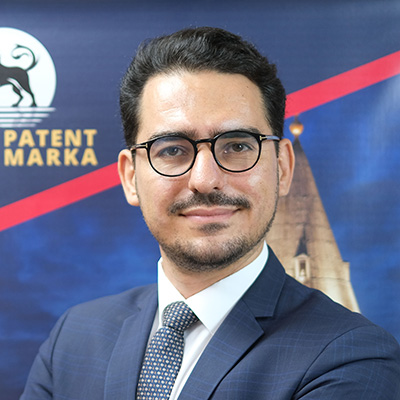
Burak Ünal
“With its innovative solutions and transparent service policy, Leo Patent is Turkey's leading intellectual and industrial property rights consultancy firm.”