

The shape of a product, the surface of a phone case, the contour of a chair, the pattern on a textile. These are commercial assets, not decoration. In Turkey, the registered industrial design is the legal instrument that turns visual identity into an enforceable monopoly for up to 25 years. Without registration, your design is exposed. Copies appear in Turkish factories, on Turkish e-commerce platforms, and at trade fairs in Istanbul and Bursa within weeks of a successful launch, and there is little a foreign rights holder can do about it before the fact.
At Leo Patent, we file, prosecute, and defend industrial design registrations before the Turkish Patent and Trademark Office (Türk Patent ve Marka Kurumu, or TÜRKPATENT) for Turkish and foreign clients every working day. This guide explains how the Turkish design system works under Industrial Property Law No. 6769 (in force since 10 January 2017), what the process costs in time and money, and what every applicant, local or international, should know before filing.
Why Industrial Design Registration in Turkey Matters
Turkey operates a first-to-file design system. Subject to narrow grace-period exceptions, the party who files first secures the exclusive right to the design in Turkey, regardless of who created it elsewhere. Turkey is also a member of the Hague Agreement on the International Registration of Industrial Designs (Geneva Act),
the Paris Convention, the Locarno Agreement, and the TRIPS Agreement.
The practical consequences for product-led businesses are real:
- Turkey is a major manufacturing and export hub for furniture, textiles, white goods, packaging, automotive parts, lighting, footwear, ceramics, and consumer electronics. Without a Turkish design registration, your product appearance can be lawfully copied and exported from Turkey to third markets where you have no other recourse.
- Turkish Customs cannot detain look-alike imports or exports unless you hold a registered Turkish design and have recorded it for customs enforcement.
- Distribution agreements, OEM contracts, and licensing arrangements depend on enforceable design rights, particularly in fashion, furniture, and consumer goods supply chains.
- Disclosure before filing can destroy the design’s novelty. Article 57 of IP Law No. 6769 provides a 12-month grace period for disclosures by the designer or successor, but most foreign rights holders inadvertently exhaust it on social media and product launches before they ever speak to a Turkish trademark and patent attorney.
- Unregistered design protection in Turkey exists under Article 55, but it is limited to 3 years from first disclosure in Turkey and is significantly harder to enforce than a registration.
A registered Turkish design is not paperwork. It is the legal foundation of every claim of exclusivity you can make on a product’s appearance in or through Turkey.
Why Choose Leo Patent
Leo Patent is a Turkish intellectual property firm built around one principle: the trademark and patent attorney who signs your application is the same person who answers your emails. No call centers. No offshore drafting. No junior staff handling sensitive filing decisions on multi-design portfolios.
The firm is led by Burak Unal, a registered Turkish Patent Attorney (Registration No. 1677) and registered Turkish Trademark Attorney (Registration No. 2900), licensed to represent clients directly before the Turkish Patent and Trademark Office.
Leo Patent is co-owned by Mr. Kaan Karanfiloglu, a senior Turkish lawyer and registered trademark attorney. Kaan Karanfiloglu is admitted to the Istanbul Bar Association (Registration No. 58270) and the Union of Turkish Bar Associations (Registration No. 133074). The combination of two co-owning principals (one focused on prosecution before TÜRKPATENT, the other on litigation and enforcement before the Turkish courts) gives clients an integrated team that can handle a design file from filing through to court action without changing firms.
What foreign clients consistently tell us they value:
- Direct trademark and patent attorney access. Foreign rights holders work with a Turkish-qualified trademark and patent attorney from the first email through to the registration certificate.
- Fluent English correspondence. Filings, office actions, oppositions, and strategy memos are handled in clear English, with full Turkish-language compliance handled internally.
- Transparent flat fees for filings, multi-design applications, renewals, and standard prosecution steps. Government fees, trademark and patent attorney fees, and any translation costs are disclosed up front.
- Strategic filing advice on multi-design strategy, Hague System designations versus national filings, partial-product views, deferred publication, and Locarno class coverage.
- Same-day response to client emails on working days. EU, UK, US, and Gulf time zones are accommodated as standard.
- Direct representation before TÜRKPATENT and the Re-examination and Evaluation Board (YİDK). Appeals, oppositions, and invalidation actions are filed in our name on our clients’ behalf.
When your design is opposed, refused, or copied, you want a Turkish trademark and patent attorney whose registration is on the file, not an intermediary.
About Burak Unal, Turkish Patent and Trademark Attorney
Burak Unal is a trademark attorney and patent attorney at Leo Patent. He graduated from Boğaziçi University in 2016 with a degree in Business Management, and went on to complete an MSc in Finance at the London School of Economics.
- Patent Attorney Registration No.: 1677
- Trademark Attorney Registration No.: 2900
- Practice: Registered Trademark and Patent Attorney before the Turkish Patent and Trademark Office (TÜRKPATENT)
- Languages: Turkish (native), English (professional), French (professional), Chinese (professional)
Burak Unal’s practice focuses on the prosecution and enforcement of industrial designs, trademarks, and patents on behalf of foreign rights holders in Turkey. His design work covers Turkish national filings, Hague System designations of Turkey, multi-design strategies, oppositions and YİDK appeals, invalidation actions, customs recordals, and pre-litigation infringement strategy.
He represents clients across furniture and home goods, textiles and fashion, lighting, consumer electronics, packaging, automotive aftermarket parts, footwear, ceramics, and jewelry. The client base ranges from multinational design houses and independent product designers to Turkish manufacturers protecting export portfolios.
His combined background in business management, finance, and Turkish IP practice gives clients a commercially literate counterparty. Filing strategy, portfolio scope, and enforcement decisions are framed around the underlying business case, not the procedural mechanics alone.
His practice rests on a simple conviction: effective design protection in Turkey requires a Turkish trademark and patent attorney who understands not only IP Law No. 6769, but how TÜRKPATENT examiners and the Turkish IP Courts actually apply the novelty and individual-character tests in real disputes.
The Design Application Process in Turkey, Step by Step
Below is the full prosecution timeline from initial instruction to grant. Indicative timelines reflect typical TÜRKPATENT processing as of 2026. Statutory deadlines are fixed by law.
Step 1. Pre-Filing Search and Clearance
Timeline: 2 to 5 working days
Although TÜRKPATENT conducts a novelty examination ex officio, we recommend an applicant-side search before filing, particularly for crowded product categories such as chairs, lamps, smartphone accessories, and footwear. A clearance review covers the Turkish design register, the Hague international register designating Turkey, EU registered designs (potentially citable as prior art), and known prior disclosures in the relevant industry.
Step 2. Preparing the Views and Specifications
Timeline: 1 to 3 working days
Drawings or photographs are the design. They define the scope of protection. TÜRKPATENT requires:
- Up to 7 views per design (perspective, front, back, top, bottom, left, right). At least one perspective view is strongly recommended.
- Consistent depiction across all views (same scale, lighting, angle reference).
- Disclaimed or non-claimed elements shown in broken lines (dashed lines), where strategic.
- Clear backgrounds. No shadows, props, or environmental context.
- Resolution sufficient for clear reproduction in the Bulletin.
We routinely advise on what to disclaim (often the most consequential strategic call), how to file partial designs, and when to file multiple variants of the same design as separate applications versus as a multi-design application.
Step 3. Locarno Classification
Timeline: Same day
Turkey applies the Locarno Classification (currently the 14th edition) for industrial designs. Classification affects the scope of TÜRKPATENT’s novelty search and the Bulletin publication category. It does not limit the scope of protection. Protection extends to the design as depicted, irrespective of the class.
Step 4. Filing the Application with TÜRKPATENT
Timeline: Same day
Applications are filed electronically through the TÜRKPATENT online portal. The applicant receives an official application number and filing date the same day. Multiple designs may be filed in a single application under Article 61, with substantial official-fee savings. See “Multi-Design Applications” below.
Step 5. Formal Examination
Timeline: Approximately 1 to 2 months
TÜRKPATENT examines the application for compliance with formal requirements: applicant data, views, classification, fees, POA, priority documents. Formal defects must be remedied within the deadline set by the office (typically 2 months).
Step 6. Novelty and Public-Order Examination
Timeline: Concurrent with formal examination
Under Article 64 of IP Law No. 6769, TÜRKPATENT performs an ex officio examination for:
- Novelty under Article 56. No identical design has been made available to the public before the filing or priority date, save for the 12-month grace period.
- Public order and morality under Article 58.
- Compliance with the statutory definition of a design under Article 55.
The novelty examination is not as deep as a patent examination, but it is real, and identical-design refusals do occur. Individual character (Article 57) is not examined ex officio, but it is the most common ground in third-party oppositions and invalidation actions.
Step 7. Publication in the Official Design Bulletin
Timeline: After examination acceptance
The accepted design is published in the Official Design Bulletin. Applicants may request deferred publication for up to 30 months from the filing or priority date under Article 62. This is a critical tool for unannounced product launches in fashion, automotive, and consumer electronics.
Step 8. Opposition Period
Timeline: 3 months from publication
Any third party may file an opposition within 3 months from the publication date under Article 67. Common grounds include:
- Lack of novelty (identical earlier design)
- Lack of individual character (different overall impression test)
- Bad-faith filing
- Conflict with earlier IP rights (earlier trademarks, copyrights, other designs)
- Filing by an unauthorized agent or representative
Decisions are issued by TÜRKPATENT and are appealable to the Re-examination and Evaluation Board (YİDK) within 2 months.
Step 9. Registration and Certificate
Timeline: 1 to 2 months after opposition period (if unopposed)
After the opposition period closes without opposition, or after a successful defense, TÜRKPATENT issues the Design Registration Certificate. The registration is valid for 5 years from the filing date and is renewable in 5-year periods up to a maximum of 25 years.
Total typical timeline for an unopposed Turkish design application: 4 to 7 months from filing to registration. For opposed applications: 12 to 18 months.
Required Documents for a Design Application in Turkey
The Turkish system is document-light compared to many jurisdictions. For most applications we require:
| Document | Required For | Notes |
|---|---|---|
| Applicant name, address, nationality | All applications | Legal entity name must match the commercial register |
| Designer name(s) and address(es) | All applications | Designer designation is mandatory under Article 70 |
| Views of the design (drawings or photographs) | All applications | Up to 7 views; broken lines for disclaimed elements |
| Locarno class indication | All applications | We handle classification |
| Indication of the product to which the design is applied | All applications | Brief textual description in Turkish |
| Power of Attorney (POA) | Foreign applicants | No notarization or legalization required. A signed scan is sufficient. |
| Priority document | If claiming Paris priority within 6 months of an earlier foreign filing | Certified copy required within 3 months |
| Assignment from designer (if applicant is not the designer) | All applications | Simple written assignment acceptable |
| Multi-design list (when applicable) | Multi-design filings | Up to 100 designs in a single application |
The simplicity of Turkish POA requirements (no notarization, no apostille, no consular legalization) is a real practical advantage. A signed PDF emailed to us is enough to begin.
Types of Designs Protectable in Turkey
Under Article 55 of IP Law No. 6769, a design is the appearance of the whole or part of a product resulting from the features of, in particular, the lines, contours, colors, shape, texture, materials, or ornamentation of the product itself. Protection extends to:
1. Product Shape and Configuration
The three-dimensional appearance of a complete product, including furniture, vehicles, consumer electronics, household appliances, packaging, lighting fixtures, footwear, and ceramics.
2. Surface Decoration and Ornamentation
Two-dimensional patterns and surface treatments such as textile prints, wallpaper patterns, ceramic glaze patterns, packaging graphics, and jewelry surface patterns.
3. Partial Designs
Distinctive parts of a product, such as a chair leg, a handle, a heel, or the curve of a phone edge, depicted with the rest of the product in broken lines.
4. Graphical User Interfaces (GUIs) and Icons
Static screen interfaces, icons, and on-screen graphics. Animated or dynamic GUIs may be protectable with appropriate sequential views.
5. Typefaces and Fonts
Original typeface designs are registrable.
6. Logos and Graphic Designs
Two-dimensional graphic works applied to products. Pure logos used as brand identifiers are usually better protected as trademarks. The strongest strategy is often dual protection: register as both a design and a trademark where the use case fits.
7. Sets of Articles
Sets of articles that share the same overall aesthetic (for example, a coordinated tableware set) can be registered as a single design.
What Cannot Be Registered
- Features dictated solely by technical function (Article 58(4))
- Features that must be reproduced in their exact form to permit mechanical connection with another product (the “must-fit” exclusion)
- Designs contrary to public order or accepted morality
- Designs conflicting with earlier IP rights of third parties
Multi-Design Applications in Turkey: A Major Cost Advantage
Article 61 of IP Law No. 6769 permits up to 100 designs in a single application, subject to the requirement that all designs share the same Locarno main class (or are filed as ornamentation designs irrespective of class).
This is one of the most cost-effective filing systems in the world for portfolio rights holders. Practical implications:
- A furniture brand launching 30 chair variants can file all 30 in one application.
- A textile company can file an entire season’s pattern collection in one filing.
- Per-design fees decrease substantially after the first design.
- Each design remains independently enforceable, renewable, and assignable.
For product-led businesses entering Turkey, multi-design applications are the default filing strategy.
Who Can Apply for a Design in Turkey?
There is no nationality restriction. Any of the following may file a Turkish design application:
- Turkish individuals and companies. They may file directly or through a registered trademark and patent attorney.
- Foreign individuals (natural persons) of any nationality. They must appoint a registered Turkish trademark and patent attorney.
- Foreign companies and legal entities. They must appoint a registered Turkish trademark and patent attorney.
- International applicants via the Hague System. They designate Turkey through WIPO. Local representation is required if a refusal or opposition arises.
Foreign applicants enjoy full national treatment under the Paris Convention and TRIPS.
Important: Under Article 160 of IP Law No. 6769, foreign applicants without a Turkish residence or place of business cannot file or prosecute directly. Representation by a registered Turkish trademark and design attorney is mandatory. Leo Patent acts as registered representative for clients in over 30 countries.
Benefits of Registering a Design in Turkey
A registered Turkish design gives the holder:
- Exclusive nationwide rights for 5 years from filing, renewable in 5-year periods to a maximum of 25 years.
- The right to prevent third parties from making, offering, marketing, importing, exporting, using, or stocking products incorporating the design or any design that does not produce a different overall impression on the informed user (Article 59).
- The right to file civil infringement actions for injunctions, damages, account of profits, destruction of infringing goods, and judgment publication.
- The right to file criminal complaints for willful design infringement under specific aggravated circumstances.
- Customs enforcement. Record the design with Turkish Customs for border detention of infringing imports and exports. This is highly effective in textiles, footwear, and small consumer goods.
- Licensing and franchising rights. Exclusive and non-exclusive licenses are recognized. Recordal with TÜRKPATENT provides enforceability against third parties.
- Asset value. Designs are transferable, mortgageable, and recognized intangible assets.
- Standing for parallel enforcement alongside trademarks and copyrights for the same product.
- Hague System priority basis. A Turkish design can serve as the basis for further international designations.
Common Mistakes Foreign Applicants Make in Turkey
After many years of design prosecution before TÜRKPATENT, the most expensive mistakes we see are predictable:
- Disclosing the design before filing. Article 57 grants only a 12-month grace period for disclosures originating from the designer. Most foreign rights holders run out the clock on Instagram, trade shows, lookbooks, and product launches before they ever file. File before the first public exposure.
- Wrong choice of views, or too few views. Views define the design. A poorly chosen single perspective view can leave key features unprotected and create unintended disclaimers. Multi-view filings with strategic use of broken lines protect what matters and disclaim what doesn’t.
- Not using broken lines (disclaimers) strategically. Failing to disclaim non-novel context (for example, the smartphone shell when filing only the camera bump) often narrows protection unnecessarily, or worse, draws TÜRKPATENT’s novelty objection to the context rather than the actual claimed design.
- Filing one design at a time when a multi-design application would do. Multi-design filings under Article 61 are dramatically cheaper. Foreign applicants used to one-design-per-application systems often miss this.
- Skipping deferred publication for unannounced launches. Article 62 permits deferral of publication for up to 30 months. For fashion seasons, auto reveals, and trade-show debuts, this is the difference between a coordinated launch and a leaked file.
- Confusing design protection with copyright or trademark. Designs, copyrights, and trademarks overlap on the same product but protect different things. The strongest protection strategies usually layer all three.
- DIY filings or non-specialist agents. Foreign applicants who file through general legal counsel or non-specialist agents routinely accept poor view selection, miss YİDK appeal deadlines, fail to handle oppositions properly, or forget renewals.
- Forgetting the 5-year renewals. Designs renew every 5 years up to 25. Missed renewals with the grace period lapsed mean an abandoned design. Use a specialist annuity service or a registered trademark and patent attorney with a docketing system.
Frequently Asked Questions (FAQ)
1. How long does design registration take in Turkey?
An unopposed Turkish design application typically reaches registration in 4 to 7 months from the filing date. If an opposition is filed during the 3-month publication period, the process can extend to 12 to 18 months depending on the complexity of the dispute and any YİDK appeals.
2. How long is a registered design valid in Turkey?
A Turkish design registration is valid for an initial 5-year term from the filing date, renewable in further 5-year periods up to a maximum total of 25 years. There is no longer term available.
3. Can foreigners register a design in Turkey?
Yes. Any foreign individual or foreign company can register a design in Turkey under exactly the same conditions as Turkish citizens, with full national treatment under the Paris Convention. The only requirement is that foreign applicants without a residence or business in Turkey must appoint a registered Turkish design attorney.
4. How much does it cost to register a design in Turkey?
Total cost depends on the number of designs in the application, the number of views, and whether an opposition is filed. As of 2026, a single-design unopposed Turkish application, including official TÜRKPATENT fees, trademark and patent attorney fees, and the registration fee, typically falls in the range of EUR 350 to 700. Multi-design applications reduce per-design cost substantially. Leo Patent provides a written flat-fee quote before any work begins.
5. Is Turkey part of the Hague System for industrial designs?
Yes. Turkey has been a party to the Geneva Act of the Hague Agreement since 1 January 2005. Foreign holders of an international registration may designate Turkey through WIPO. If TÜRKPATENT issues a provisional refusal or the design is opposed, a registered Turkish trademark and patent attorney must be appointed to respond.
6. Can multiple designs be filed in a single Turkish application?
Yes. Under Article 61 of IP Law No. 6769, up to 100 designs can be filed in one application, provided they share the same Locarno main class or are surface ornamentation. Each design remains independently enforceable, renewable, and assignable. Multi-design applications significantly reduce per-design official fees and are the default strategy for product-led businesses.
7. Does Turkey examine novelty for designs?
Yes. Under Article 64 of IP Law No. 6769, TÜRKPATENT examines novelty ex officio alongside formal requirements and public-order grounds. Individual character is not examined ex officio, but it is the most common ground in third-party oppositions and invalidation actions.
8. What is the grace period for disclosure of a design before filing in Turkey?
Article 57 provides a 12-month grace period. Disclosures by the designer (or by a third party derived from the designer) within the 12 months preceding the filing or priority date do not destroy novelty. Disclosures by independent third parties, or by the designer more than 12 months before filing, generally do.
9. Can I claim priority from an earlier foreign design application?
Yes. Under the Paris Convention, Turkey recognizes priority claims filed within 6 months of the first foreign application. A certified copy of the priority document must be submitted within 3 months of filing the Turkish application.
10. What is the opposition period for designs in Turkey?
The opposition period is 3 months from the date of publication of the design in the Official Design Bulletin. This deadline is strict and cannot be extended.
11. What is the difference between a Turkish patent and a Turkish design?
A patent protects the technical function of an invention. A design protects the appearance of a product, including its shape, ornamentation, lines, contours, colors, and texture. Patents require novelty and inventive step and last 20 years from filing. Designs require novelty and individual character and last up to 25 years (in 5-year increments). The same product can often be protected by both, in parallel.
12. Can a logo or graphic be registered as a design in Turkey?
Yes. Two-dimensional graphics, surface ornamentation, and even typefaces can be registered as designs. Where the same graphic is also used as a brand identifier, dual protection as both a design and a trademark is the strongest strategy.
13. Can I keep my design confidential after filing in Turkey?
Yes, partially. Under Article 62, applicants may request deferred publication for up to 30 months from the filing or priority date. The design remains pending and unpublished until the deferral expires or is voluntarily lifted. This is widely used in fashion, automotive, and consumer electronics for coordinated launches.
14. What happens if my design application is refused?
If TÜRKPATENT refuses your application on novelty or public-order grounds, you have 2 months to appeal to the Re-examination and Evaluation Board (YİDK). If YİDK upholds the refusal, you may file a cancellation action before the Ankara IP Courts within 2 months of notification. Leo Patent handles all three levels.
15. Is a Turkish trademark and patent attorney required for foreign design applicants?
Yes. Under Article 160 of IP Law No. 6769, individuals and legal entities without a residence or place of business in Turkey must be represented by a Turkish trademark and design attorney registered with TÜRKPATENT. This is mandatory for all post-filing acts (oppositions, responses, appeals, renewals, recordals).
16. Can I license or assign my Turkish design registration?
Yes. Turkish designs may be licensed (exclusively or non-exclusively), assigned, mortgaged, and inherited. To be enforceable against third parties, assignments and licenses must be recorded with TÜRKPATENT. Assignments must be in writing.
17. Does an EU registered design protect me in Turkey?
No. Turkey is not an EU member state. A Registered Community Design (RCD) granted by EUIPO has no automatic effect in Turkey. To obtain protection in Turkey, you must either file a Turkish national application or designate Turkey under the Hague System. We routinely coordinate parallel EU and Turkey design strategies.
18. Can unregistered designs be protected in Turkey?
Yes, to a limited extent. Article 55 of IP Law No. 6769 provides unregistered design protection for 3 years from the date the design is first made available to the public in Turkey. The scope is narrower (protection only against deliberate copying) and the burden of proof on the rights holder is significantly higher. Registration is strongly preferable for any design of commercial significance.
19. Are spare parts and “must-match” designs protectable?
Article 58 carves out features dictated solely by technical function and “must-fit” parts. There is also a “repair clause” consideration for spare parts visible in use. Practical analysis depends on the part and the market. Automotive aftermarket designs require particular care.
20. Can I convert a Turkish design registration into a 3D trademark?
Not directly. They are separate IP rights with different requirements. However, if a registered design has acquired distinctiveness through use as a brand identifier, the same product appearance can be separately registered as a 3D trademark under the trademark regime. Many premium product designs (bottles, lighters, distinctive housings) hold both.
File Your Design in Turkey: Talk to a Registered Turkish Trademark and Patent Attorney
If you are preparing to launch a new product in Turkey, extend a portfolio into the Turkish market, or designate Turkey under the Hague System, Leo Patent can help. We offer:
- A free initial assessment of your design and proposed filing strategy
- A written flat-fee quote, including multi-design pricing where applicable
- Filing within 1 to 3 working days of instruction
- Direct, English-language correspondence with a registered Turkish trademark and patent attorney throughout the process
- Deferred publication, priority claims, and Hague refusal responses handled in-house
Contact Leo Patent today to file your design application in Turkey with confidence.
Email: [email protected] Website: www.leopatent.com
Filed and prosecuted directly before the Turkish Patent and Trademark Office (TÜRKPATENT).
Important Note: Leo Patent offers trademark and patent attorney services for intellectual property registration and consulting in Turkey. We don’t offer lawyer services.
You can verify our trademark and patent license at TürkPatent at this website https://www.turkpatent.gov.tr/vekil-arastirma. You can type Burak Ünal at the search bar to verify our official license.
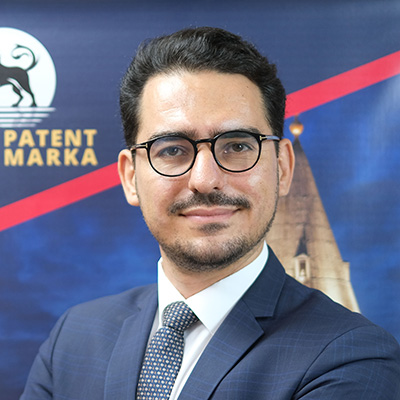
Burak Ünal
“With its innovative solutions and transparent service policy, Leo Patent is Turkey's leading intellectual and industrial property rights consultancy firm.”