

A Turkish trademark, patent, or design registration protects you in Turkey. Beyond Turkey, it protects you nowhere. The mistake foreign-facing Turkish businesses make most often is to register at home and assume the rest of the world follows. It does not. Outside Turkey, your brand can be filed in your name by a distributor in Riyadh, a copyist in Guangzhou, or a former employee in Berlin, and you will need to start over in each jurisdiction at far higher cost than a coordinated international filing would have required.
International applications are the international IP system’s answer to that problem. Through WIPO’s Madrid Protocol, the Patent Cooperation Treaty (PCT), and the Hague System (Geneva Act), a Turkish applicant can extend protection from a single Turkish base into more than 100 jurisdictions with one filing, one currency, and one set of deadlines. Through the European Patent Office (EPO) and the European Union Intellectual Property Office (EUIPO), additional regional routes are available for European coverage.
At Leo Patent, we file and prosecute international applications from Turkey through TÜRKPATENT as the office of origin, and we coordinate the resulting designations through trusted authorized foreign partners in destination jurisdictions. This guide explains how each route works, who should use which, what they cost, and how an experienced Turkish trademark and patent attorney avoids the mistakes that turn a clean international strategy into an expensive global mess.
Why International Application Matters for Turkish Businesses
Turkey is a manufacturing and design hub at the junction of the EU, the Middle East, the Caucasus, and Central Asia. Most Turkish manufacturers, exporters, and design houses sell into multiple jurisdictions, and most foreign companies that invest in Turkey operate in dozens more. A Turkish-only IP portfolio fails almost every commercial use case beyond pure domestic trading.
Concrete consequences of failing to file internationally:
- Bad-faith filings by distributors and agents. Foreign distributors registering “your” brand in their own name in their own country is the single most common dispute we see. It is far cheaper to prevent than to litigate abroad.
- Customs problems. Customs in target markets cannot detain counterfeit goods unless there is a local registration.
- No basis for license deals. Licensing partners require enforceable local rights, not a copy of a Turkish certificate.
- Lost priority. The 6-month (designs and trademarks) and 12-month (patents) Paris Convention priority deadlines do not extend just because a Turkish filing exists.
- Higher cost of national filings later. Coordinated international routes (Madrid, PCT, Hague) cost a fraction of filing 30 separate national applications.
The Turkish Patent and Trademark Office (Türk Patent ve Marka Kurumu, or TÜRKPATENT) serves as the office of origin for Turkish-based international applicants. The choice of system, designations, and timing is the strategic core of the work.
Why Choose Leo Patent
Leo Patent is a Turkish intellectual property firm built around one principle: the trademark and patent attorney who advises you is the same person who answers your emails. No call centers. No outsourced filings on the Turkish side.
The firm is led by Burak Unal, a registered Turkish Patent Attorney (Registration No. 1677) and registered Turkish Trademark Attorney (Registration No. 2900), licensed to represent clients directly before the Turkish Patent and Trademark Office in trademark, patent, design, and geographical indication matters. Burak Unal is authorized to file IP applications in Turkey. For prosecution and representation in non-Turkish jurisdictions (national phase entries, EP prosecution, EUTM filings, US trademark filings, and so on), Leo Patent works with a network of vetted authorized partner firms in each destination country.
Leo Patent is co-owned by Mr. Kaan Karanfiloglu, a senior Turkish lawyer and registered trademark attorney. Kaan Karanfiloglu is admitted to the Istanbul Bar Association (Registration No. 58270) and the Union of Turkish Bar Associations (Registration No. 133074). The combination gives clients both the TÜRKPATENT-side prosecution capability and the Turkish-court-side capability for any IP-related litigation or contractual dispute that arises out of an international filing strategy.
What foreign and Turkish clients consistently tell us they value:
- One point of contact for all international filings. You instruct us once in English. We coordinate Madrid, PCT, Hague, EP, EUTM, and bilateral national filings through TÜRKPATENT and through partner firms abroad.
- Direct trademark and patent attorney access with a Turkish-qualified trademark and patent attorney from initial assessment through filing and prosecution.
- Fluent English correspondence, with full Turkish-language compliance handled internally.
- Transparent flat fees for filings, designations, and routine prosecution. Partner firm costs in foreign jurisdictions are quoted upfront on a per-country basis.
- Strategic filing advice, not order-taking. We will tell you when a Madrid designation is the wrong tool, when a national filing is needed, and when an EP grant should be validated in Turkey rather than filed nationally.
- Same-day response on working days across EU, UK, US, and Gulf time zones.
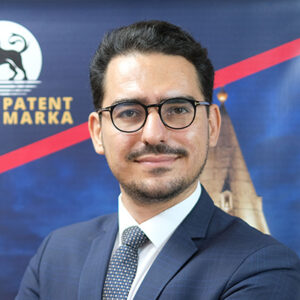
About Burak Unal, Turkish Patent and Trademark Attorney
Burak Unal is a trademark attorney and patent attorney at Leo Patent. He graduated from Boğaziçi University in 2016 with a degree in Business Management, and went on to complete an MSc in Finance at the London School of Economics.
- Patent Attorney Registration No.: 1677
- Trademark Attorney Registration No.: 2900
- Trademark and Patent Attorney Practice: Registered before the Turkish Patent and Trademark Office (TÜRKPATENT)
- Languages: Turkish (native), English (professional), French (professional), Chinese (professional)
The PCT: International Patent Applications from Turkey
The Patent Cooperation Treaty (PCT) is the world’s primary route for international patent filings. Administered by WIPO, it allows a single application to preserve patent filing rights in 150+ member states, with national phase entry deferred for up to 30 months from the earliest priority date.
How It Works from Turkey
- Priority filing. Most applicants first file a Turkish national patent application (or designate Turkey as the receiving office of a PCT direct filing). This establishes the priority date under the Paris Convention.
- PCT international application. Within 12 months of the priority filing, the applicant files the PCT international application through TÜRKPATENT as the receiving office (or directly with WIPO).
- International search. A designated International Searching Authority (ISA) issues an International Search Report and Written Opinion within ~9 months of the priority date. Turkish applicants typically use the EPO as ISA.
- International publication. WIPO publishes the application at 18 months from priority.
- Optional Chapter II examination. The applicant can request International Preliminary Examination for a more substantive opinion.
- National phase entry. Within 30 months from priority, the applicant must enter the national phase in each country where protection is sought. National phase entry in Turkey is handled directly by Leo Patent; entries in foreign countries are coordinated through authorized partner firms.
Key Numbers
- 30-month national phase deadline. Strict and not generally restorable beyond limited unintentionality grounds.
- International publication. 18 months from priority.
- Term of patent. 20 years from the PCT filing date in each country where granted.
When PCT Is the Right Tool
- The applicant wants to defer the cost of multiple national filings while preserving filing rights.
- The applicant wants an ISA opinion on patentability before committing to national filings.
- The applicant plans to file in 3 or more countries.
When PCT Is Not the Right Tool
- The applicant only wants protection in 1 to 2 countries (direct national filings may be cheaper).Patent Attorney Registration No.: 1677
- Trademark Attorney Registration No.: 2900
- Trademark and Patent Attorney Practice: Registered before the Turkish Patent and Trademark Office (TÜRKPATENT)
- Languages: Turkish (native), English (professional), French (professional), Chinese (professional)
Burak Unal’s international practice covers Madrid Protocol applications filed through TÜRKPATENT as the office of origin, PCT international applications filed through TÜRKPATENT, Hague System international design applications, and Turkish-side validations of European patents (EP-TR). For prosecution in foreign jurisdictions (national designations, EUTM filings, national phase entries in non-Turkish countries, US TTAB matters, etc.), Burak Unal coordinates the work with vetted authorized partner firms in each country.
He serves Turkish exporters expanding abroad, foreign companies designating Turkey through international routes, multinational portfolio managers, and SMEs entering new markets. His combined background in business management, finance, and Turkish IP practice gives clients a commercially literate counterparty: filing decisions are framed around the market case, not procedural mechanics.
The Main International Routes Available from Turkey
There is no single “international application.” There are several international systems, each covering a different IP right. Choosing the right one is the strategic core of international filing work.
| System | IP Right | Administered By | Coverage | Base in Turkey |
|---|---|---|---|---|
| Madrid Protocol | Trademarks | WIPO (Geneva) | 130+ member states | TÜRKPATENT as office of origin |
| PCT (Patent Cooperation Treaty) | Patents | WIPO | 150+ member states | TÜRKPATENT as receiving office |
| Hague System (Geneva Act) | Industrial designs | WIPO | 90+ contracting parties | TÜRKPATENT-issued certified copy |
| EPC (European Patent Convention) | Patents | European Patent Office (EPO, Munich) | 39 contracting states | Direct EPO filing |
| EUTM | Trademarks | EUIPO (Alicante) | 27 EU member states (single right) | Direct EUIPO filing through partner |
| RCD (Registered Community Design) | Designs | EUIPO | 27 EU member states (single right) | Direct EUIPO filing through partner |
| Geneva Act of the Lisbon Agreement | Geographical indications | WIPO | 30+ contracting parties | TÜRKPATENT-based GI |
| National filings | All rights | Each country’s IP office | Country-by-country | Through partner firm in each country |
The right combination depends on what you are protecting, where, on what budget, and over what timeline.
The Madrid Protocol: International Trademarks from Turkey
The Madrid Protocol is the world’s most-used trademark filing system. Administered by WIPO, it allows a single application to designate multiple member states with one filing, one fee, in one language (English, French, or Spanish).
How It Works from Turkey
- Basic mark. The applicant must have a Turkish trademark application or registration (the “basic mark”) in their name with TÜRKPATENT.
- International application. The Madrid application is filed through TÜRKPATENT as the office of origin. TÜRKPATENT certifies the basic mark and forwards the file to WIPO.
- WIPO formal examination. WIPO checks the formalities, issues an international registration number, and publishes the mark in the WIPO Gazette.
- Designation forwarding. WIPO forwards the designation to each designated country’s national office.
- National examination. Each designated office examines the designation under its national law within 12 or 18 months (the “refusal period”). If there is no provisional refusal, protection is granted.
- Provisional refusals. If a designated office issues a provisional refusal, the applicant must appoint a local agent in that country to respond. We coordinate this through authorized partner firms.
Key Numbers
- Term of protection. 10 years, renewable indefinitely through WIPO with a single renewal payment per international registration.
- Refusal period. 12 months by default; 18 months for countries that have made the relevant declaration.
- Central attack period. 5 years. During the first 5 years, the international registration depends on the Turkish basic mark. If the basic mark is cancelled, the international registration falls with it (with transformation rights available).
- Subsequent designation. Additional countries can be added later through subsequent designations.
- The applicant has or will have a Turkish basic mark.
- The applicant plans to file in 3 or more Madrid member states.
- The applicant prefers consolidated renewals and centralized management.
When Madrid Is Not the Right Tool
- The target country is not a Madrid member.
- The applicant wants to claim broader specifications than the Turkish basic mark permits.
- The applicant wants to avoid the central-attack risk in the first 5 years.
The Hague System: International Industrial Designs from Turkey
The Hague System (Geneva Act) is the international system for industrial designs. Turkey has been a party since 1 January 2005. Up to 100 designs can be filed in a single Hague application, with designations to any of 90+ contracting parties.
How It Works from Turkey
- Application. The applicant files the Hague application directly with WIPO (or through TÜRKPATENT for forwarding). Turkish basic registration is not required.
- WIPO formal examination and publication. WIPO checks formalities and publishes the international registration.
- National examination. Each designated office examines the designation under its national law within 6 or 12 months (typical refusal periods). If there is no provisional refusal, protection is granted.
- Provisional refusals. Local response required. Handled through authorized partner firms.
Key Numbers
- Term of protection. Generally 5-year terms renewable up to a country-specific maximum (often 15 or 25 years).
- Refusal period. Usually 6 months; some offices have declared 12 months.
When Hague Is the Right Tool
- The applicant has a portfolio of designs to file in multiple Hague member states.
- The applicant prefers consolidated renewal and centralized management.
When Hague Is Not the Right Tool
- The target country is not a Hague member (China is a recent member; some markets remain outside).
- The applicant only needs protection in 1 to 2 countries.
The European Patent (EPC) Route from Turkey
Turkey has been a contracting state to the European Patent Convention (EPC) since 1 November 2000. Turkish applicants can file a European patent application directly with the European Patent Office (EPO) in Munich, claiming priority from a Turkish application within 12 months. Examination is conducted by the EPO. Once granted, the European patent is validated in each chosen contracting state (Turkey included, via the 3-month EP-TR validation route).
When the EPC Route Is the Right Tool
- The applicant wants European coverage in 3 or more EPC states.
- The applicant prefers a single examination process to multiple national examinations.
EPO prosecution is handled by qualified European Patent Attorneys. Leo Patent coordinates EPO work with authorized European Patent Attorney partners and handles the Turkish-side validation directly.
EUTM and RCD: EU-Wide Trademark and Design Filings
The EUTM (European Union Trade Mark), administered by EUIPO in Alicante, is a single trademark right covering all 27 EU member states. The RCD (Registered Community Design) is the equivalent single design right.
Turkey is not an EU member state, so Turkish applicants cannot use Turkey as the basis for an EUTM or RCD. However, Turkish nationals and companies can file directly with EUIPO. Leo Patent coordinates EUTM and RCD filings through authorized EU-based partner firms.
When EUTM / RCD Is the Right Tool
- The applicant wants single-application coverage across the EU rather than country-by-country.
- The brand is genuinely used or to be used in the EU.
National Filings Outside Turkey
For jurisdictions that are not party to Madrid, PCT, or Hague (or where strategy favors a direct national filing), Leo Patent coordinates direct national filings through trusted authorized partner firms in each destination country. We handle:
- US trademarks (USPTO) and US patents (USPTO)
- UK trademarks and designs (UKIPO) post-Brexit
- GCC trademark filings (Saudi Arabia, UAE, Kuwait, Qatar, Bahrain, Oman)
- China trademarks (CNIPA) and patents
- Russian and Central Asian filings (EAPO and national offices)
- Africa (OAPI, ARIPO, and national filings)
- Latin America (Mexico, Brazil, Argentina, etc.)
The client receives a single coordinated quote, single English correspondence, and a single point of accountability. Local prosecution is done by authorized local counsel in each jurisdiction.
Foreign Applicants Designating Turkey
International routes also work in reverse. Foreign holders of an international registration can designate Turkey through:
- Madrid Protocol designation of Turkey. Foreign trademark holders extend protection to Turkey through WIPO. TÜRKPATENT examines and either accepts or issues a provisional refusal. If refused, the applicant must appoint a registered Turkish trademark and patent attorney to respond.
- PCT national phase entry into Turkey. Within 30 months from priority. Translation and filing handled by a registered Turkish patent attorney.
- Hague System designation of Turkey. Foreign design holders extend protection to Turkey through WIPO. TÜRKPATENT examines for novelty and either accepts or refuses.
- EP validation in Turkey. Within 3 months of EPO grant publication.
For foreign applicants without a residence or place of business in Turkey, Article 160 of IP Law No. 6769 requires representation by a registered Turkish trademark and patent attorney. Leo Patent acts as registered representative for clients in over 30 countries.
Required Information and Documents
| Item | Required For | Notes |
|---|---|---|
| Applicant details | All filings | Must match the Turkish basic application or registration |
| Basic mark / basic application | Madrid | Must be in the same name as the international applicant |
| Mark / claims / drawings | All filings | Standard for the respective IP right |
| Nice classes (trademarks) | Madrid, EUTM, national | Same or narrower than the basic mark for Madrid |
| Designated states list | Madrid, PCT, Hague | Strategic choice; subject to additional fees per state |
| Priority document | Where claiming Paris priority | Within statutory deadline |
| Power of Attorney (POA) | All Turkish-side filings | No notarization required |
| Translations | Country-specific | Coordinated with partner firms |
Common Mistakes in International Filings from Turkey
After many years of international prosecution work, the most expensive mistakes we see are predictable:
- Filing Madrid when the Turkish basic mark is weak. If the basic mark falls in the first 5 years (central attack), the international registration falls with it. Sometimes a national first filing in target jurisdictions is safer.
- Designating too many countries on Madrid that the client will never use. Each designation has fees, deadlines, and potential refusal-response costs. Designate where you actually trade.
- Missing the 30-month PCT deadline in target countries. Strict and rarely restorable. Calendar discipline is non-negotiable.
- Filing PCT without an examined Turkish or foreign priority. A poor priority application limits what the PCT and the national phase can claim.
- Treating EUTM as covering Turkey. Turkey is not an EU member. EUTM has no Turkish effect.
- Treating an EP grant as automatic Turkish protection. EP grants must be validated in Turkey within 3 months of grant publication. Missed validations are rarely recoverable.
- Filing through a forwarding agent rather than a registered trademark and patent attorney. Forwarding agents are not authorized to prosecute. When a provisional refusal arrives, the file freezes until a real trademark and patent attorney is appointed, often missing the response deadline.
- Ignoring partner firm selection. The quality of foreign counsel determines the quality of international prosecution. We work only with vetted partner firms.
Frequently Asked Questions (FAQ)
1. Can a Turkish trademark be extended internationally?
Yes, through the Madrid Protocol. The Madrid application is filed through TÜRKPATENT as office of origin and designates one or more of the 130+ Madrid member states. The basic Turkish mark must exist in the same name as the international applicant.
2. How long does an international Madrid application take?
WIPO issues the international registration within approximately 2 to 4 months of filing. National examination in designated states takes 12 to 18 months. The total time to enforceable protection in each designated country depends on whether provisional refusals are issued.
3. What is the deadline for PCT national phase entry?
30 months from the earliest priority date. This deadline is strict. Turkish national phase entry is handled by Leo Patent directly; foreign national phase entries are handled through authorized partner firms.
4. Can a Turkish design be extended internationally?
Yes, through the Hague System (Geneva Act). Up to 100 designs can be filed in a single Hague application designating multiple member states. Turkey has been a Hague Geneva Act member since 1 January 2005.
5. Can I file directly with the EPO from Turkey?
Yes. Turkish applicants can file European patent applications directly with the EPO in Munich, claiming Paris Convention priority within 12 months of a Turkish priority filing. EPO prosecution is coordinated with authorized European Patent Attorney partners.
6. Does an EUTM trademark cover Turkey?
No. Turkey is not an EU member state. EUTM trademarks granted by EUIPO have no automatic effect in Turkey. For Turkish protection, file nationally with TÜRKPATENT or designate Turkey via Madrid.
7. Does a Registered Community Design (RCD) cover Turkey?
No. RCDs granted by EUIPO have no automatic effect in Turkey. For Turkish protection, file nationally with TÜRKPATENT or designate Turkey via Hague.
8. Does a granted European patent (EPO) cover Turkey automatically?
No. EP grants must be validated in Turkey within 3 months of grant publication, with a Turkish translation of the claims. Validation is handled by a registered Turkish patent attorney.
9. Can a single international application cover China, the EU, the US, and the Middle East?
Not through any single system. For trademarks, Madrid Protocol covers most major jurisdictions (including the EU, US, UK, Russia, China, India, GCC members are now joining), but coordination still requires multiple designations. For patents, PCT is the closest single-route option. EU and US require their own examination procedures.
10. How much does an international Madrid application cost from Turkey?
It depends on the number of designations and classes. As of 2026, a typical Madrid application with 5 designations and 3 classes might fall in the range of EUR 2,500 to 6,000, including WIPO fees, individual fees per designated country, trademark and patent attorney fees, and translation. Leo Patent provides a written flat-fee quote before any work begins.
11. How much does a PCT international application cost from Turkey?
Filing the PCT itself (without national phase) typically costs in the range of EUR 3,000 to 6,000, including WIPO fees, EPO search fees (if used as ISA), and trademark and patent attorney fees. National phase entry adds additional cost per country. A written quote is provided before filing.
12. Is Burak Unal authorized to file applications in foreign countries?
Burak Unal is a registered Turkish Patent Attorney and Trademark Attorney registered with TÜRKPATENT in Turkey. He files Madrid Protocol applications through TÜRKPATENT, PCT international applications through TÜRKPATENT, Hague applications through Turkey, and Turkish-side validations. For prosecution and representation in foreign jurisdictions, Leo Patent coordinates the work with authorized partner firms in each destination country, all under a single coordinated engagement.
13. Can foreign applicants designate Turkey through international routes?
Yes. Madrid Protocol designations of Turkey, PCT national phase entries into Turkey, Hague System designations of Turkey, and EP validations in Turkey are all routinely handled by Leo Patent on behalf of foreign rights holders. Article 160 of IP Law No. 6769 requires representation by a registered Turkish trademark and patent attorney for foreign applicants without a Turkish residence or place of business.
14. What languages can the international application be filed in?
Madrid: English, French, or Spanish. PCT: English, French, German, Spanish, Chinese, Japanese, Russian, Korean, Portuguese, Arabic. Hague: English, French, or Spanish. EPO: English, French, or German. EUTM and RCD: any EU official language. National filings: the language of each national office. Turkish-language compliance for any Turkish-office-of-origin filing is handled internally by Leo Patent.
15. Can I add more countries later to my Madrid registration?
Yes. Subsequent designations can be added at any time after the initial international registration is in force, for additional countries that the applicant later wants to enter.
16. What is “central attack” in Madrid?
For the first 5 years after the international registration date, the international registration depends on the basic Turkish mark. If the basic mark is cancelled, refused, withdrawn, or expires without renewal during those 5 years, the international registration falls with it. Transformation rights allow conversion of the affected international designations into national filings, but at significant additional cost.
17. How do you coordinate with partner firms abroad?
Leo Patent maintains a curated network of vetted partner IP firms in destination jurisdictions. When a foreign filing or response is needed, we brief the partner firm in English, manage the timeline, review key prosecution decisions, and present a single consolidated bill to the client. The client has one point of contact (Leo Patent) and one English-language correspondence stream.
18. Are there any countries where Madrid does not work?
Madrid covers 130+ member states, but some jurisdictions remain outside (and a few markets present practical limitations even as members). For those countries, direct national filings through partner firms are used.
File Your International Application: Talk to a Registered Turkish Trademark and Patent Attorney
If you are a Turkish business preparing to file abroad, a foreign company designating Turkey through Madrid, PCT, or Hague, or a portfolio holder consolidating international filings, Leo Patent can help. We offer:
- A free initial assessment of the right route (Madrid, PCT, Hague, EPC, EUTM, RCD, or national)
- A written flat-fee quote covering WIPO and national fees, Leo Patent fees, and partner firm fees abroad
- Direct, English-language correspondence with a registered Turkish patent and trademark attorney
- A single coordinated engagement across all destination jurisdictions
Contact Leo Patent today for international IP filings from Turkey.
Email: [email protected] Website: www.leopatent.com
Important Note: Leo Patent offers trademark and patent attorney services for intellectual property registration and consulting in Turkey. We don’t offer lawyer services.
You can verify our trademark and patent license at TürkPatent at this website https://www.turkpatent.gov.tr/vekil-arastirma. You can type Burak Ünal at the search bar to verify our official license.
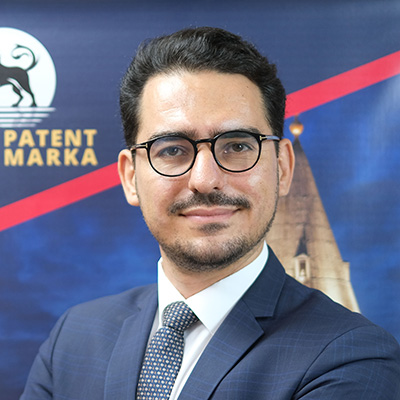
Burak Ünal
“With its innovative solutions and transparent service policy, Leo Patent is Turkey's leading intellectual and industrial property rights consultancy firm.”