

A copyright in Turkey is born the moment a qualifying work is created. There is no application, no examination, no certificate required for the right to exist. The work, whether a novel, a piece of software, a song, a film, a photograph, an architectural plan, or a database, is protected from creation under Law No. 5846 on Intellectual and Artistic Works (Fikir ve Sanat Eserleri Kanunu, or FSEK). Turkey has been a party to the Berne Convention since 1952, the TRIPS Agreement, the WIPO Copyright Treaty (WCT), and the WIPO Performances and Phonograms Treaty (WPPT), which means that foreign works enjoy the same protection in Turkey as Turkish works.What people usually mean when they say “register a copyright in Turkey” is the optional registration with the Ministry of Culture and Tourism, Directorate General of Copyright (Kültür ve Turizm Bakanlığı, Telif Hakları Genel Müdürlüğü). For most works this registration is voluntary and serves as evidence rather than as the basis of the right. For cinematographic works and musical works incorporating music and sound recordings, registration is mandatory before commercial exploitation.At Leo Patent, we advise foreign and Turkish rights holders on the full Turkish copyright life cycle: protection strategy, registration where required or commercially useful, licensing, online and offline enforcement, anti-piracy programs, and dispute support. This guide explains how Turkish copyright actually works, what foreign rights holders need to know, and how to avoid the predictable mistakes that turn enforceable rights into unprovable claims.
Why Copyright Protection in Turkey Matters
Copyright is the legal foundation of the creative and digital economy. In a Turkish context, this means:- Software, including SaaS platforms, mobile apps, embedded firmware, and AI models, is protected as a literary work under FSEK.
- Online content, video, music, photographs, articles, e-books, gaming assets, is protected on creation.
- Architectural and engineering plans, industrial drawings, and technical documentation are protected.
- Audiovisual content distributed in Turkey, including foreign streaming platforms, films, and series, depends on Turkish copyright protection for licensing and enforcement.
- Databases with original selection or arrangement are protected.
- Online infringement, including pirated software, counterfeit content, illegal streaming, and unauthorized e-commerce listings, is widespread on Turkish-facing platforms.
- Licensing deals (publishing, distribution, broadcast, software, merchandising) require clear ownership chains and documented rights.
- Customs enforcement against pirated copies depends on a clear evidence base, often supported by Ministry registration certificates.
- Without Ministry registration, certain enforcement procedures (in particular for cinematographic and musical works) cannot proceed.
- Without proper assignment and license documentation, ownership disputes can derail entire deals or productions.
Why Choose Leo Patent
Leo Patent is a Turkish intellectual property firm built around one principle: the trademark and patent attorney who advises you is the same person who answers your emails. No call centers. No outsourced advice.The firm is led by Burak Unal, a registered Turkish Patent Attorney (Registration No. 1677) and registered Turkish Trademark Attorney (Registration No. 2900), licensed to represent clients directly before the Turkish Patent and Trademark Office (TÜRKPATENT). Burak Unal is authorized to act before TÜRKPATENT. Copyright matters in Turkey are administered by the Ministry of Culture and Tourism, not TÜRKPATENT. For copyright registration with the Ministry, copyright litigation, and other Turkish authorities outside TÜRKPATENT, Leo Patent works with our co-owner Mr. Kaan Karanfiloglu and a network of vetted authorized partner firms. Foreign-jurisdiction copyright work is similarly coordinated with authorized partners abroad.Leo Patent is co-owned by Mr. Kaan Karanfiloglu, a senior Turkish lawyer and registered trademark attorney. Kaan Karanfiloglu is admitted to the Istanbul Bar Association (Registration No. 58270) and the Union of Turkish Bar Associations (Registration No. 133074). Court enforcement, criminal complaints, takedown notices to Turkish ISPs and platforms, and litigation under Law No. 5846 are handled in-house by Mr. Kaan Karanfiloglu.What foreign and Turkish rights holders consistently tell us they value:- One firm for the full IP picture. Trademarks, patents, designs, GIs, and copyrights coordinated under one engagement, with Turkish-court matters and Ministry of Culture matters handled by the right specialist.
- Direct trademark and patent attorney access. Foreign clients work with a Turkish-qualified trademark and patent attorney from the first email through to delivery.
- Fluent English correspondence. Strategy notes, opinions, and registration support in clear English; full Turkish-language compliance handled internally.
- Transparent flat fees for defined work. No opaque hourly billing on routine recordal and registration tasks.
- Same-day response on working days across EU, UK, US, and Gulf time zones.
About Burak Unal, Turkish Patent and Trademark Attorney
Burak Unal is a trademark attorney and patent attorney at Leo Patent. He graduated from Boğaziçi University in 2016 with a degree in Business Management, and went on to complete an MSc in Finance at the London School of Economics.
- Patent Attorney Registration No.: 1677
- Trademark Attorney Registration No.: 2900
- Trademark and Patent Attorney Practice: Registered before the Turkish Patent and Trademark Office (TÜRKPATENT)
- Languages: Turkish (native), English (professional), French (professional), Chinese (professional)
How Turkish Copyright Law Actually Works
Categories of Protected Works Under FSEK
Law No. 5846 protects four main categories of works, each with its own subcategories:- Scientific and literary works (Article 2): novels, poetry, articles, lectures, computer programs, databases, choreography, mime works.
- Musical works (Article 3): all forms of musical compositions, with or without lyrics.
- Fine arts works (Article 4): paintings, drawings, sculpture, engravings, photography, applied arts, architecture, illustrations, comic and cartoon works, fashion designs, jewelry, embroidery.
- Cinematographic works (Article 5): films, television productions, music videos, animated works.
Authorship and Initial Ownership
- The author is the natural person who created the work (Article 8). Initial ownership vests in the author by default.
- For cinematographic works, the producer holds the financial rights, while moral rights remain with the natural authors (director, original screenwriter, dialogue writer, original music composer, animator).
- For employee works, financial rights generally pass to the employer where the work was created in the course of employment, but the position is fact-specific and should be documented.
- Commissioned works require an express written agreement to transfer financial rights to the commissioner.
Author’s Rights
Authors hold two distinct categories of rights:Moral rights (Articles 14 to 17), inalienable but the exercise can be transferred:- Right to disclose the work to the public.
- Right of paternity (recognition of authorship).
- Right of integrity (right to prevent distortion of the work).
- Right to make modifications.
- Right of reproduction.
- Right of distribution.
- Right of public performance.
- Right of communication to the public, including via broadcasting and online transmission.
- Right of adaptation.
Term of Protection
- General rule: life of the author plus 70 years.
- For works of joint authorship: 70 years from the death of the last surviving author.
- For works owned initially by a legal entity: 70 years from the date of publication.
- For cinematographic works: 70 years from publication.
- For works of unknown authorship: 70 years from lawful disclosure.
Copyright Registration in Turkey: When and Why
Copyright protection arises automatically. Registration is not a precondition for protection. However, two situations require registration, and a third makes it strongly advisable.1. Mandatory Registration Before Commercial Exploitation
Under Article 13 of FSEK and the Regulation on Compulsory Registration, producers and rights holders of cinematographic works and musical works incorporating music and sound recordings must register the work with the Ministry of Culture and Tourism before commercial exploitation. Without registration, distribution and public performance are not legally possible in Turkey.2. Recommended Registration for Software
Although not mandatory, software developers routinely register with the Ministry to create an early-dated public record of authorship, useful in disputes about source code ownership, employee inventions, and timing of creation.3. Voluntary Registration for Evidence
For other categories of works (literary, fine arts, photography, designs that overlap with copyright), voluntary registration with the Ministry creates a useful evidentiary record. The certificate is not conclusive proof of authorship, but it shifts the practical burden of proof and supports enforcement.Registration Procedure (Coordinated Through Authorized Partners)
Because copyright registration is administered by the Ministry of Culture and Tourism rather than TÜRKPATENT, Leo Patent coordinates these registrations through authorized partner firms working with Mr. Kaan Karanfiloglu. Typical requirements:- Application form to the Ministry.
- Description of the work and its category.
- Sample of the work (manuscript, audio file, video file, source code on physical media for software, photographs of fine art, etc.).
- Author and rights-holder identity details.
- Power of attorney for foreign applicants.
- Official fees.
Copyright in Software, AI, Databases, and Online Content
Software
Software is protected as a literary work under Article 2 of FSEK. Source code, object code, preparatory design materials, and embedded firmware are all protected. Reverse engineering, decompilation, and back-up copying are subject to the same exceptions broadly familiar from EU copyright law (decompilation for interoperability, back-up by legitimate user). Open-source license compliance is a significant practical issue: the conditions of GPL, LGPL, MIT, Apache, and similar licenses are binding under Turkish copyright law.AI-Generated Output
Turkish law, like most jurisdictions, requires a human author for copyright to subsist. Pure machine-generated outputs (without sufficient human creative contribution) are not protectable as authored works under FSEK. AI training data, prompt engineering, and the resulting outputs are an active and unresolved area both in Turkey and globally. We advise on strategy and risk allocation.Databases
Original databases are protected as compilations under Article 6. Sui generis database rights (in the EU sense) are not directly recognized as a separate right under Turkish law, but database protection is available where original selection or arrangement is shown.Online Content
User-generated content, social media posts, livestream content, and influencer creations are all potentially protected under FSEK if they meet the originality requirement. Platform liability and notice-and-takedown procedures are governed by the Law on the Regulation of Publications on the Internet (Law No. 5651) in addition to FSEK.Copyright Enforcement in Turkey
Copyright enforcement in Turkey runs along multiple tracks. Each is handled by the appropriate specialist within Leo Patent or by authorized partner firms.1. Civil Action
Civil enforcement before the specialized IP Courts (Ankara, Istanbul) for injunctions, damages (actual or three times royalty), destruction of infringing copies, and publication of judgment. Handled by our co-owner Mr. Kaan Karanfiloglu.2. Criminal Complaint
Article 71 of FSEK criminalizes wilful copyright infringement, with penalties of 1 to 5 years imprisonment and judicial fines for serious cases. Criminal complaints are filed with the public prosecutor. Handled by our co-owner Mr. Kaan Karanfiloglu.3. Customs Enforcement
Pirated copies of audiovisual works, software, books, and similar copyright-protected products can be detained by Turkish Customs. Recordal of the underlying copyright (where registered) and accompanying trademarks supports the enforcement.4. Notice-and-Takedown for Online Infringement
Under Law No. 5651 and FSEK, notice-and-takedown procedures are available for online infringement. Procedures vary depending on the host (Turkish hosting, foreign hosting, social media platforms with Turkish representatives required by recent regulation).5. Anti-Piracy Programs
For consistent infringement of software, music, video, or e-book content, structured anti-piracy programs combine technical measures, monitoring, and serial enforcement. We design these alongside trademark and design enforcement.Copyright Licensing in Turkey
Copyright licensing is governed primarily by FSEK rather than IP Law No. 6769. Key features:- Written form is generally required for transfer or licensing of financial rights to be effective.
- Specific identification of the rights granted is essential. Generic “all rights” assignments are interpreted narrowly under Turkish law.
- Future works can be licensed in limited circumstances; full assignments of all future works are restricted.
- Moral rights cannot be assigned; only the exercise can be delegated.
- Collective management organizations (MESAM, MSG, GESAM, SETEM, BİRLEŞMİŞ FİLM YAPIMCILARI MESLEK BİRLİĞİ, etc.) manage rights for many music, film, and publishing rights holders. Membership and licensing through CMOs is a standard route.
Common Mistakes Foreign Rights Holders Make in Turkey
After many years of advising on Turkish copyright matters, the most expensive mistakes we see are:- Assuming “fair use” applies in Turkey. Turkish copyright follows the European civil-law tradition of specific enumerated exceptions (private use, quotation, news reporting, education, parody under limited conditions), not a flexible US-style “fair use” doctrine. Assumed exceptions often do not exist.
- Skipping mandatory registration for film and music. Cinematographic works and music incorporating sound recordings require registration with the Ministry of Culture and Tourism before commercial exploitation. Distribution without registration is unlawful.
- Verbal or implied licenses. Turkish law requires written, specific licenses for financial rights. Oral or implied licenses are typically unenforceable for the transfer of significant rights.
- Generic “all rights” assignments. Turkish courts interpret broad assignments narrowly. Specific enumeration of each financial right being granted is essential.
- No documentation of employee or contractor authorship. Default rules on employee and commissioned works are fact-specific. Without written documentation, ownership disputes years later are common.
- Ignoring open-source compliance in software. Open-source license obligations (GPL copyleft in particular) are binding under Turkish copyright law. Non-compliance can void distribution rights.
- No notice-and-takedown strategy for online infringement. The procedural mechanisms exist. Without a workflow and counsel familiar with Turkish hosting law, infringing content stays online indefinitely.
- Ignoring moral rights. Moral rights are inalienable in Turkey. Contractual waivers must be carefully drafted to be effective; some forms of waiver are not enforceable.
Frequently Asked Questions (FAQ)
1. Do I need to register a copyright in Turkey for it to be protected?
No, not generally. Copyright arises automatically on creation under Law No. 5846 (FSEK) and the Berne Convention. Registration is only mandatory for cinematographic works and for musical works incorporating music and sound recordings before commercial exploitation. For other works, registration with the Ministry of Culture and Tourism is voluntary and serves as evidence.2. How long does copyright protection last in Turkey?
Generally, the life of the author plus 70 years. For cinematographic works and works initially owned by legal entities, 70 years from publication. Joint works are protected for 70 years from the death of the last surviving author.3. Is Turkey a member of the Berne Convention?
Yes. Turkey has been a party to the Berne Convention since 1952, and is also a party to the TRIPS Agreement, the WIPO Copyright Treaty (WCT), and the WIPO Performances and Phonograms Treaty (WPPT). Foreign works enjoy national treatment.4. Where is copyright registered in Turkey?
With the Directorate General of Copyright (Telif Hakları Genel Müdürlüğü) of the Ministry of Culture and Tourism, not with TÜRKPATENT. Leo Patent coordinates registration through authorized partner firms working with our co-owner Mr. Kaan Karanfiloglu.5. Is software protected by copyright in Turkey?
Yes. Software is protected as a literary work under Article 2 of FSEK. Source code, object code, and preparatory design materials are all protected. Software-implemented inventions with a technical effect may also be protectable as patents under separate criteria.6. Are AI-generated works protected by copyright in Turkey?
Turkish copyright law requires a human author. Pure machine-generated outputs without sufficient human creative contribution are not currently protectable as authored works. AI-assisted works with substantial human creative input may be protectable, but the line is unsettled.7. Can I assign or license my copyright in Turkey?
Financial rights can be assigned or licensed in writing, with specific enumeration of the rights granted. Moral rights cannot be assigned, although the exercise can be delegated by contract. Assignments and licenses of significant copyright rights must be in written form to be effective.8. How do I take down infringing online content in Turkey?
Through notice-and-takedown procedures under Law No. 5651 (Internet) and FSEK. Procedures depend on whether the host is Turkish or foreign, and on the platform’s compliance with Turkish hosting law. Persistent infringement can be addressed through court orders. Litigation handled by our co-owner Mr. Kaan Karanfiloglu.9. What is the penalty for copyright infringement in Turkey?
Civil remedies include injunctions, damages (actual or up to three times the licensing royalty), destruction of infringing copies, and publication of judgment. Criminal penalties under Article 71 of FSEK include 1 to 5 years imprisonment and judicial fines for wilful infringement.10. Can a logo be protected by both copyright and trademark in Turkey?
Yes. A creative logo can be protected as a fine art work under FSEK (copyright) and registered as a trademark under IP Law No. 6769. Dual protection is the strongest brand strategy. Trademark registration is handled directly by Leo Patent before TÜRKPATENT.11. Does Turkey recognize moral rights of authors?
Yes. Articles 14 to 17 of FSEK protect the moral rights of disclosure, paternity, integrity, and modification. Moral rights are inalienable. Some forms of contractual waiver are recognized; others are not.12. Can foreigners enforce copyrights in Turkey?
Yes. Under the Berne Convention’s national treatment principle, foreign rights holders have the same protection in Turkey as Turkish rights holders. Litigation is handled by our co-owner Mr. Kaan Karanfiloglu. Power of attorney requirements for foreign rights holders are minimal.13. How does copyright interact with employee inventions and works in Turkey?
Where a work is created in the course of employment, financial rights generally vest in the employer, subject to specific provisions of FSEK. Documentation in employment contracts is essential. Default rules differ from US-style “work for hire” assumptions.14. Is “fair use” recognized in Turkey?
Not in the US sense. Turkish copyright follows the European civil-law tradition of specific enumerated exceptions (private use, quotation, news reporting, educational use, parody in limited circumstances). The flexible US “fair use” balancing test does not apply.15. How much does copyright registration in Turkey cost?
Voluntary registration of a single work with the Ministry of Culture and Tourism, including official fees, trademark and patent attorney coordination through authorized partners, and documentation, typically falls in the range of EUR 300 to 800 depending on the type of work and supporting materials. Mandatory cinematographic and music registrations may be higher. Leo Patent provides a written quote before any work begins.16. Are music sampling and cover versions allowed in Turkey?
Sampling and cover versions require licenses, typically through the relevant collective management organization (MESAM, MSG) or directly with the rights holder. Unauthorized sampling is infringement.17. Can databases be protected by copyright in Turkey?
Yes. Databases with original selection or arrangement are protected as compilations under Article 6 of FSEK. Pure factual databases without originality may have limited protection.18. Can a Turkish copyright be licensed internationally?
Yes. Copyright licensing is generally governed by the chosen law of the contract, subject to Turkish mandatory rules where the work is exploited in Turkey. International coordination is done through Leo Patent and authorized partner firms in destination jurisdictions.Protect Your Copyright in Turkey: Talk to a Registered Turkish IP Firm
If you are a software company, publisher, music label, film producer, design studio, or foreign rights holder enforcing in Turkey, Leo Patent can help. We offer:- A free initial assessment of your copyright question
- A written flat-fee quote covering registration coordination, licensing support, and enforcement strategy
- Direct, English-language correspondence with a registered Turkish patent and trademark attorney
- Coordinated handling of Ministry of Culture registration and copyright litigation through our co-owner Mr. Kaan Karanfiloglu, and foreign jurisdictions through authorized partner firms
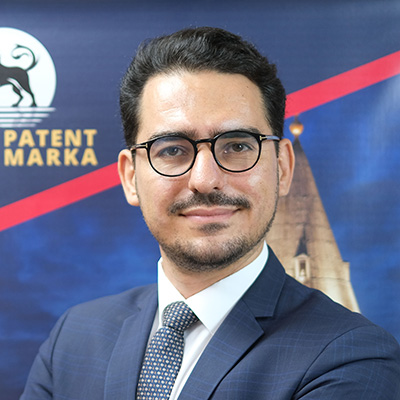
Burak Ünal
“With its innovative solutions and transparent service policy, Leo Patent is Turkey's leading intellectual and industrial property rights consultancy firm.”